
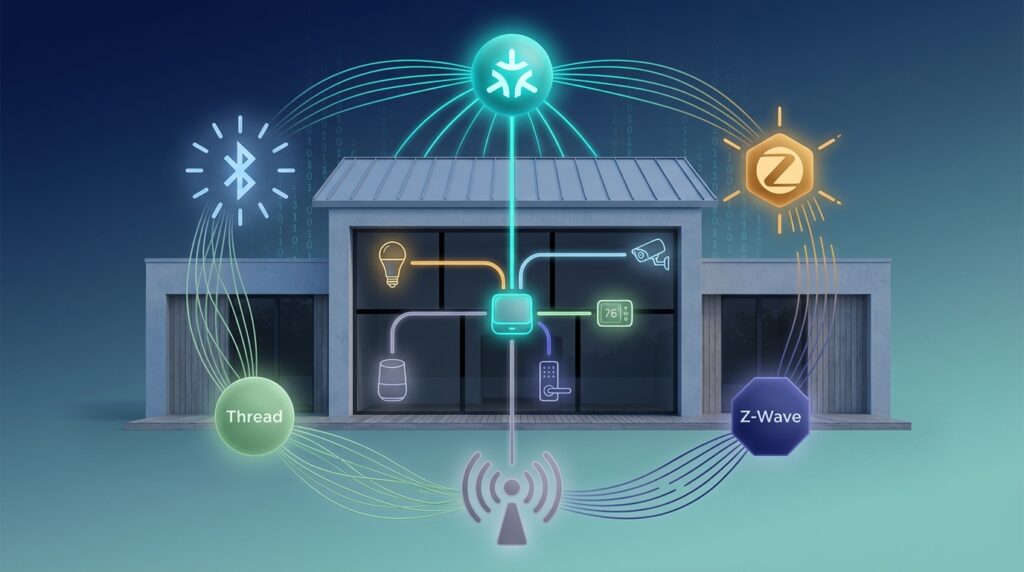
Welcome to the world of connected living! Building a seamless automated setup requires more than just buying the latest gadgets. The secret lies in understanding the languages your gadgets use to talk to each other.
A communication protocol is essentially this language. It is a set of rules that allows different devices to exchange information smoothly. This ensures they can work together, no matter who made them.
Choosing the wrong one can lead to real headaches. You might experience poor battery performance, weak signals, or connections that drop unexpectedly. This can leave your automated setup feeling frustratingly disconnected.
While the new Matter standard gets a lot of attention, it’s not the only option. Several other established protocols exist, each with unique strengths and ideal uses for different situations in your house.
This guide will help you navigate this landscape. We will explore the key options beyond Matter. Our goal is to help you make informed choices for a harmonious and reliable system where all your gadgets operate as one.
Key Takeaways
- Communication protocols are the essential “languages” that allow your devices to work together.
- Without a compatible protocol, devices from different brands may not connect or function properly.
- Selecting an unsuitable protocol can cause issues like short battery life and unreliable connections.
- Matter is a significant new standard, but it is not the only protocol available for your connected home.
- Understanding the different options helps you build a more reliable and efficient automated ecosystem.
- Each protocol has specific advantages, making some better suited for certain tasks than others.
- Informed decisions about these standards ensure all your devices operate together seamlessly.
Introduction to the World of Smart Home Protocols
Ever wondered how your gadgets actually talk to each other in a connected setup? These communication languages are called protocols. They’re the invisible rules that let your devices work together smoothly.
Defining the Landscape of Home Connectivity
Think of protocols as different languages for your electronics. Just like people need to speak the same language to understand each other, your devices need compatible protocols. This ensures they can exchange information effectively.
Each protocol has unique strengths. Some prioritize battery life, while others focus on range or speed. Understanding these differences helps you choose the right technology for each part of your setup.
A Brief Evolution from Early Standards to Today
The journey began with proprietary systems that locked users into single brands. Early options like Z-Wave and Zigbee emerged in the 2000s to create more flexibility. They solved specific problems like power consumption and reliability.
Wi-Fi connected devices then became popular for their convenience. More recently, Thread and Matter arrived as next-generation solutions. This progression shows how the industry moved toward greater interoperability.
If you’re just starting out, our beginner’s guide to your first setup explains how to navigate these choices. Each protocol emerged to address real challenges in creating harmonious connected environments.
Exploring “smart home standards”: Matter vs. Alternatives
The arrival of Matter in 2022 marked a significant shift in how devices communicate within automated environments. This new approach focuses on bridging the gaps between different systems rather than creating another separate ecosystem.
What Sets Matter Apart?
Matter’s biggest advantage is its role as a universal translator. It enables products using different communication methods to work together seamlessly. This interoperability solves a major frustration for users.
Major tech companies like Apple, Google, and Amazon support this standard. Their backing ensures widespread adoption across various product lines. Matter doesn’t replace existing protocols but works on top of them.
Key Differences with Other Protocols
Unlike older standards that created closed ecosystems, Matter bridges them. It uses IP-based communication for better compatibility. This allows devices from different manufacturers to connect easily.
The certification process from the Connectivity Standards Alliance guarantees true interoperability. This ensures a consistent experience when using Matter-enabled devices together in your setup.
Deep Dive into the Matter Protocol
Understanding Matter’s capabilities helps you appreciate why it’s gaining traction across the industry. This protocol offers a balanced approach to device communication.
Benefits and Advantages
Matter’s flexibility stands out immediately. It works across multiple connection methods like Wi-Fi, Thread, and Ethernet. This gives you choices for how your devices connect.
Security is another strong advantage. Matter uses AES-128 encryption to protect your data. This ensures information stays safe from unauthorized access.
Over-the-air updates keep your devices current. They receive security patches and new features automatically. This extends their useful life without manual intervention.
The IP-based communication makes setup simpler. Devices integrate easily with existing networks. Remote access works without complicated procedures.
Limitations and Certification Requirements
As a relatively new standard launched in 2022, Matter faces adoption challenges. Not all manufacturers have released certified products yet. This can limit your device choices currently.
Real-world implementation sometimes encounters hiccups. Different companies may interpret the standard slightly differently. Support rolls out at varying speeds across ecosystems.
The certification process ensures quality but requires investment. Manufacturers must get products certified by the Connectivity Standards Alliance. Only then can they display the Matter logo.
While promising universal compatibility, Matter is still maturing. It may not solve every interoperability issue immediately. The standard continues to evolve across product categories.
Examining Alternative Communication Protocols
The landscape of device communication extends far beyond any single standard, with multiple protocols serving distinct purposes. Each technology brings specialized advantages that make them ideal for different applications.
Overview of Zigbee, Z-Wave, and Thread
Zigbee operates on the 2.4 GHz frequency band using mesh networking. This protocol consumes minimal power, allowing battery-operated devices to function for years. It’s perfect for sensors, switches, and lighting systems.
Z-Wave uses sub-GHz frequencies between 800-900 MHz. This avoids interference from Wi-Fi networks. The technology supports up to 232 nodes in a single network.
Thread works over IPv6 with 2.4 GHz frequency. It provides exceptional energy efficiency and scalability. Recent research demonstrates how Thread’s architecture supports modern requirements.
| Protocol | Frequency | Key Strength | Ideal Use |
|---|---|---|---|
| Zigbee | 2.4 GHz | Low power consumption | Sensors, lighting controls |
| Z-Wave | 800-900 MHz | Interference avoidance | Security systems, locks |
| Thread | 2.4 GHz | IPv6 support | Modern ecosystems |
Real-World Case Scenarios
Choose Zigbee for whole-house lighting setups. Dozens of bulbs can communicate reliably without draining batteries in wireless switches. The mesh network ensures coverage throughout all areas.
Select Z-Wave for security-focused installations. Smart locks and door sensors work without interference, even with crowded Wi-Fi. This reliability is crucial for safety applications.
Implement Thread in modern setups combining it with other standards. Devices communicate locally with fast response times. The energy efficiency benefits battery-powered devices significantly.
Security and Reliability in Home Protocols
The foundation of any trustworthy automated setup lies in robust security measures and dependable network performance. Different communication methods approach these critical aspects in unique ways.
Encryption Standards and Data Protection
Most protocols use strong encryption to protect your information. AES-128 encryption provides excellent security for your data. This standard prevents unauthorized access to your system.
Wi-Fi relies on WPA2 and WPA3 protocols for protection. Matter adds extra layers with public key infrastructure. Thread includes built-in security features that block attacks.
| Protocol | Encryption Method | Security Features | Update Support |
|---|---|---|---|
| Zigbee/Z-Wave | AES-128 | Basic encryption | Limited OTA |
| Wi-Fi | WPA2/WPA3 | Network security | Regular updates |
| Matter | AES-128 + PKI | Device authentication | Full OTA support |
| Thread | Built-in security | Attack prevention | Regular updates |
Ensuring Stability in Mesh Networks
Mesh networks offer remarkable reliability through self-healing capabilities. If one device fails, the system automatically reroutes signals. This maintains continuous communication without interruption.
Your overall security also depends on personal practices. Use strong passwords and keep firmware updated. Be selective about which devices get internet access for optimal protection.
Power Efficiency and Mesh Networking Explained
Behind every reliable automated setup lies careful consideration of power efficiency and network architecture. These two factors determine how long your devices last and how well they communicate throughout your living space.
Battery Life and Low-Power Designs
Different protocols handle energy consumption very differently. Zigbee and Z-Wave are designed for minimal power draw, allowing battery-operated devices to function for years.
Z-Wave Long Range takes this even further. Devices can run up to 10 years on a single coin-cell battery. This makes it perfect for sensors you don’t want to frequently maintain.
Wi-Fi consumes significantly more energy than low-power alternatives. Bluetooth Low Energy achieves impressive efficiency by transmitting data in short bursts only when needed.
Mesh Networks: Benefits and Limitations
Mesh networking creates a web where each device acts as both endpoint and repeater. This extends your network’s range throughout your entire house.
The self-healing capability automatically finds alternative routes when one device fails. Your system stays connected even if individual components go offline.
However, large spaces with thick walls may need additional routers. This increases cost and complexity but ensures reliable coverage across all areas.
Choosing the Right Protocol for Your Smart Home
Making the right protocol choice for your automated residence involves balancing multiple technical considerations. Start by evaluating your current setup and future plans.
Assessing Device Compatibility and Use Cases
First, inventory your existing gadgets and planned additions. This prevents compatibility issues that could limit your options. Match protocols to specific tasks for optimal performance.
Wi-Fi works best for bandwidth-heavy products like cameras. Low-power options like Zigbee excel with sensors. Security-focused installations often benefit from Z-Wave’s reliability.
| Factor | Priority | Best Protocol Match | Consideration |
|---|---|---|---|
| Network Range | Large homes | Z-Wave | Coverage area |
| Power Efficiency | Battery devices | Zigbee/Thread | Longevity |
| Interoperability | Mixed brands | Wi-Fi/Matter | Flexibility |
| Bandwidth Needs | Video streaming | Wi-Fi/Ethernet | Data volume |
| Security Level | Sensitive data | Matter/Thread | Encryption |
Future-Proofing Your Home Internet of Things
Consider emerging standards like Matter for long-term value. While established protocols offer extensive device ecosystems today, newer options provide better interoperability across brands.
Balance immediate needs with forward-thinking choices. Sometimes mixing protocols creates the most adaptable system for evolving automation needs.
Comparative Insights from Industry Studies and Real-World Data
Real-world testing data provides concrete evidence of how various protocols handle different automation scenarios. Industry research moves beyond theoretical specifications to show actual performance in everyday use.
Analysis of Performance and Interoperability
Data transfer rates reveal clear distinctions between protocols. Wi-Fi handles several gigabits per second, making it ideal for video streaming. Zigbee and Thread operate at 250 kbps—perfect for lighting commands but not video.
Frequency bands impact real-world reliability. Protocols using 2.4 GHz face more interference from competing devices. Z-Wave’s sub-GHz operation provides clearer signals with less disruption.
Mesh networks demonstrate impressive stability through self-healing capabilities. Zigbee and Z-Wave maintain operation even when individual devices fail. This makes them highly dependable for critical functions.
Range analysis shows significant variations. Z-Wave Long Range reaches up to 15 kilometers in ideal conditions. Bluetooth LE typically maxes out around 100 meters, affecting coverage for larger homes.
Interoperability testing reveals both progress and challenges. Matter-certified devices from different manufacturers generally work well together. However, some compatibility issues still emerge in complex installations.
“Performance testing shows that protocol choice directly impacts user experience, with each technology excelling in specific applications.”
Network congestion data highlights another key difference. Wi-Fi networks can slow down with many connected devices. Zigbee maintains consistent performance even with hundreds of devices operating simultaneously.
Conclusion
Achieving harmony between your connected devices depends on selecting the right communication languages. There’s no single “best” protocol that works for everyone.
Your choice should match your specific needs. Consider your space size, device types, and priorities like battery life and security. Matter offers exciting compatibility, but established options like Zigbee and Thread provide proven reliability.
Think about your long-term strategy. Many successful setups use multiple protocols for different areas. Start with a clear plan for which rooms and functions you want to automate first.
Focus on open standards with broad industry support. This ensures your devices will receive updates and remain compatible as technology evolves. Your investment stays protected for years to come.
With thoughtful planning, you can create an ecosystem where all your gadgets work together seamlessly. The right choices lead to reliable performance that enhances your daily life.