
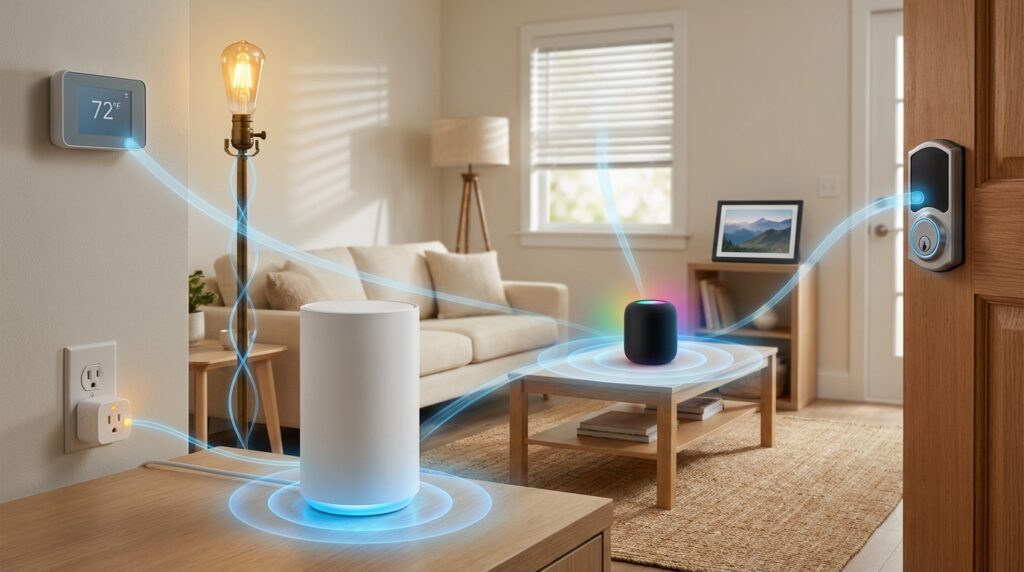
Welcome to the exciting world of smart home technology. A new standard is here to simplify how all your gadgets talk to each other. This innovation promises a more unified and reliable experience for your entire house.
If you already own a collection of connected gadgets, you might be asking a big question. Can your current investments join this new era, or will you need to buy everything again? The answer brings a lot of hope for many homeowners.
The great news is that this new system is designed with your existing setup in mind. Some of your older devices might be upgradeable through a simple firmware update. Others can continue to work peacefully alongside new gear using solutions like a Matter bridge.
This guide will walk you through the practical realities. We’ll cover which of your current devices have a path forward and what to expect during the transition. You’ll learn about the various ways to bring your older tech into the modern ecosystem.
Whether you’re a seasoned enthusiast or just starting out, understanding this change is key. It will help you make smart decisions about your technology investments for a more connected home.
Key Takeaways
- Matter is a new smart home standard designed to improve device communication.
- Many older smart devices may be compatible through updates or bridges.
- You likely won’t need to replace your entire existing smart home setup.
- Firmware updates can sometimes bring older devices into the Matter ecosystem.
- Using a Matter bridge is a common solution for integrating non-Matter devices.
- The goal is a seamless and unified smart home experience.
Understanding Matter and Its Benefits
For years, smart home enthusiasts faced the frustration of incompatible devices from different manufacturers. Each company created its own ecosystem that rarely worked well with others. This fragmentation made building a cohesive automated home challenging.
The introduction of a universal protocol promises to change this dynamic completely. It represents a collaborative effort from industry leaders to create harmony in your connected space.
The Evolution of Smart Home Standards
Early home automation relied on proprietary systems that locked users into specific brands. Google, Amazon, and Apple each developed their own closed environments. This approach limited consumer choice and created technical barriers.
The new standard builds upon proven networking technologies like Thread and Wi-Fi. It doesn’t reinvent the wheel but rather creates a common language for existing infrastructure. This practical approach ensures broader adoption and reliability.
| Feature | Proprietary Standards | Matter Approach |
|---|---|---|
| Interoperability | Limited to same brand | Works across all platforms |
| Setup Process | Complex, brand-specific | Simple, standardized |
| Control Options | Single ecosystem only | Multiple assistants supported |
| Network Requirements | Often cloud-dependent | Local control available |
Matter’s Role in Modern Home Automation
This protocol brings local control capability as a game-changing feature. Your devices communicate directly within your home network without constant internet connection. This results in faster responses and improved reliability during outages.
Security is fundamentally integrated into the design. End-to-end encryption and device authentication protect your home from unauthorized access. The system minimizes data exposure while maintaining full functionality.
When you see the distinctive logo on a product, you gain confidence in its versatility. The same device works seamlessly with Alexa, Google Assistant, or Apple HomeKit. This freedom lets you choose based on preference rather than compatibility concerns.
Exploring matter backward compatibility with Older Smart Devices
When adopting new home automation protocols, many homeowners wonder about the fate of their current device collections. The good news is that this transition doesn’t necessarily mean replacing everything you own.
Which Devices Can Be Upgraded?
The answer depends heavily on your specific gadgets and their underlying capabilities. Some products have the right hardware foundation to receive software updates.
Wi-Fi based smart home devices often have the best upgrade potential. They already possess the necessary networking components. A simple firmware adjustment can often bring them into the new ecosystem.
Manufacturer support plays a crucial role too. Even technically capable devices need company commitment to receive updates. Always check with manufacturers about their specific upgrade roadmaps.
Firmware Updates and Bridge Options
For devices using different communication protocols, bridge solutions offer excellent integration paths. These hubs act as translators between different technological languages.
Your existing Zigbee sensors or Z-Wave switches can connect through compatible bridges. This approach preserves your investments while enabling participation in modern automations.
The most encouraging aspect is that non-upgradable devices continue functioning normally. They coexist peacefully with newer gear in a mixed environment. This allows for gradual, budget-friendly transitions.
Integrating Matter with Major Ecosystems
Among major platforms, Google Home offers one of the most comprehensive implementations of the universal protocol. This ecosystem embraces the new standard with extensive device compatibility and intuitive control options.
Google Home Support and Device Types
Google’s platform supports over 25 different device categories. These range from basic lighting and sensors to complex appliances like dishwashers and robot vacuums.
You can control these devices through multiple interfaces. Voice commands via Google Assistant, the Google Home app, and Smart Display touchscreens all work seamlessly.
Many Google Nest products serve dual roles as hubs and Thread Border Routers. This eliminates the need for additional hardware purchases.
| Control Method | Supported Actions | Example Devices |
|---|---|---|
| Google Assistant | Voice commands, status checks | Lights, thermostat, locks |
| Google Home App | Full device management, automations | All supported device types |
| Smart Displays | Touch controls, visual feedback | Cameras, sensors, climate devices |
Security features include important safeguards for door locks. Remote and voice unlock remain disabled for locks without PIN requirements.
Bridge devices work transparently within the ecosystem. They allow older devices to appear as native Matter devices in your home setup.
Battery-powered Thread sensors maintain responsive performance. Their sleep periods stay within three seconds for reliable operation.
Practical Considerations for Upgrading Your Home
Upgrading your smart home should feel exciting, not overwhelming. Getting ready for the new standard involves a few simple but important steps. Focusing on setup, security, and certification ensures a smooth and safe experience.
Setup, Security, and Privacy Best Practices
The setup process is remarkably simple. Most new devices use a QR code or a digital pairing code. They connect via low-energy Bluetooth for a one-step onboarding to your network and preferred app.
Security is built right in. Every communication uses end-to-end encryption. This keeps your commands private, even if someone intercepts the network traffic.
Your privacy is also protected through data minimization. Gadgets only share the specific information needed for their job. They avoid collecting excessive personal data.
Device Certification and Compliance
Look for official certification when buying new gear. Every certified device has credentials from a designated authority. These are recorded in a secure ledger to verify authenticity.
This certification process guarantees the device meets strict security and performance standards. It gives you confidence that your new gadget will work reliably and safely with your existing setup.
Enhanced Local Control with Matter
Local control is a major benefit for your daily use. Devices can operate directly on your home network without needing the internet. This means faster responses and continued operation during an internet outage.
Households using different platforms enjoy multi-administrator support. You can grant access to Google Home and Apple HomeKit for the same device. This allows everyone to control the home their way.
Advanced Smart Home Applications with Matter
Smart plugs offer one of the most accessible entry points into advanced home automation. They instantly transform ordinary appliances into intelligent devices you can control remotely.
Leading brands like Eve, Shelly, and Meross now offer models that support the latest standards. These smart plugs work seamlessly across different platforms.
Smart Plugs, Lighting, and Sensor Integration
Lighting represents another mature category with extensive options. From simple bulbs to color-changing strips, these devices create responsive environments.
Thread-based products like the Nanoleaf Essentials deliver near-instant response times. This eliminates frustrating delays common with older Wi-Fi bulbs.
Sensor integration opens sophisticated automation possibilities. Motion detectors can trigger lights, while temperature sensors adjust climate control automatically.
As one expert notes, “The combination of Thread and Matter technologies creates a foundation for truly responsive smart homes” according to this comprehensive guide.
Future-Proofing Your Home Automation
Choosing certified matter devices today ensures long-term compatibility. Manufacturers committed to the standard provide ongoing updates.
This approach protects your investment as the specification evolves. Your smart home devices will continue working together seamlessly for years.
Window coverings and air quality monitors join the ecosystem too. These additions make your home more comfortable and energy-efficient.
Conclusion
The journey toward a truly unified smart home has reached a pivotal moment. The emerging standard transforms how different brands work together, creating a seamless experience for users.
Your existing investments remain valuable. Older gear continues operating while new certified devices join your ecosystem. This approach makes upgrading practical and budget-friendly.
Enhanced security and local control deliver immediate benefits. Your home automation responds faster and works during internet outages. The technology supports multiple platforms within the same household.
Whether starting your first smart home setup or expanding an existing one, this foundation ensures long-term compatibility. The specification continues evolving with new device categories and features.
This development represents genuine progress in home automation technology. It finally delivers the reliable, responsive smart home experience homeowners deserve.