
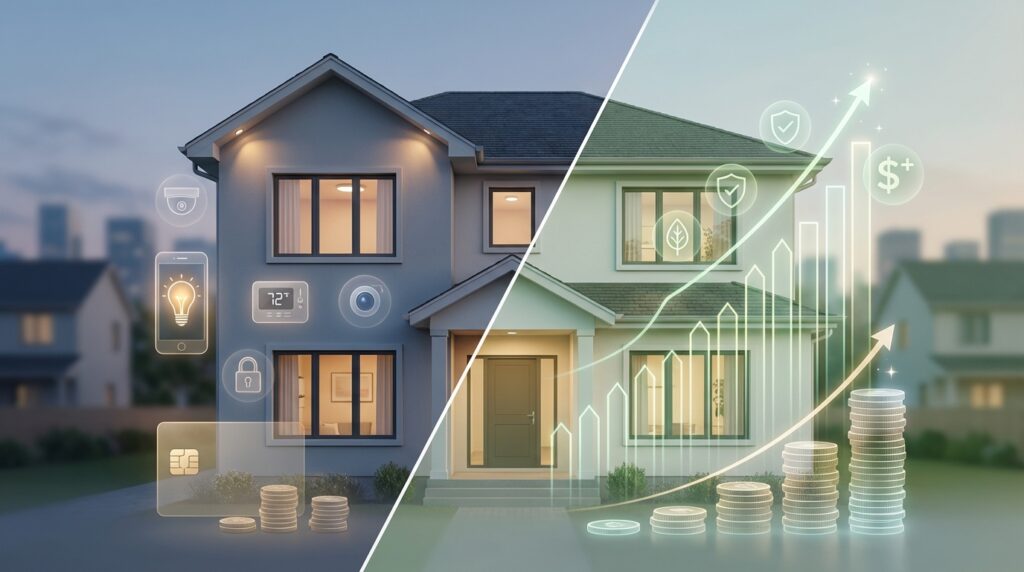
Lightbulbs you control from your phone. Thermostats that learn your schedule. These innovations are moving into houses everywhere. Many people now wonder if this technology is a wise financial move or just a costly gadget.
This guide tackles that big question head-on. We will break down the initial price you pay against the benefits you gain over time. Our goal is to give you a clear picture to help with your decision.
The numbers show this is a major shift, not a short-lived trend. The U.S. market for these systems is projected to triple, reaching $99 billion by 2032. Major property operators are already installing these platforms. For example, a Zillow analysis found smart home features can lead to a 4.4% rent increase.
We will explore real energy savings, security perks, and how these features can boost your property’s appeal. This practical approach is for everyone, from first-time buyers to seasoned developers looking to maximize returns.
Key Takeaways
- The smart home market is experiencing explosive growth, signaling a fundamental change in residential living.
- Upfront costs must be weighed against long-term benefits like energy savings and potential property value increases.
- Smart technology is increasingly seen as a standard expectation rather than a luxury feature in properties.
- Institutional investors are now factoring “tech-readiness” into their evaluations, impacting overall value.
- A practical, step-by-step approach can make integrating this technology manageable and financially sound.
Introduction to Smart Home Investment
What began as simple programmable gadgets has transformed into comprehensive residential automation systems. This evolution makes understanding the investment crucial for today’s property decisions.
Exploring the Evolution of Home Technology
The journey of residential automation shows remarkable progress. Early programmable thermostats paved the way for today’s integrated ecosystems.
Modern systems connect lighting, security, and climate control seamlessly. This integration creates true whole-house automation that benefits daily living.
| Era | Key Features | User Experience | Market Position |
|---|---|---|---|
| 1990s-2000s | Basic programmable devices | Manual programming required | Luxury novelty items |
| 2010-2015 | Wi-Fi connected devices | Smartphone control available | Early adopter phase |
| 2016-Present | Fully integrated ecosystems | Voice control & automation | Mainstream expectation |
The Buyer’s Guide Perspective
Today’s property seekers expect modern amenities. Residential automation features now influence purchasing decisions significantly.
Different buyers have unique needs. First-time owners might start with basic devices. Property investors seek systems that increase rental appeal.
Builders must decide which technologies to include in new developments. Understanding smart home device ROI helps prioritize investments that deliver real value.
The right approach balances current costs with long-term benefits. This ensures your investment enhances property value while improving daily living.
Understanding Smart Home ROI
Calculating the real benefits of connected living systems requires looking at both immediate savings and future advantages. The return on investment extends beyond simple dollar figures to include quality of life improvements.
Defining Smart Home ROI
ROI for residential technology comes from two main sources. Monetary savings appear through energy efficiency and lower maintenance costs.
Perceived value grows from enhanced lifestyle amenities. These features make properties more desirable to modern buyers and renters.
How ROI Influences Home and Property Value
Financial models show impressive results. According to Rently data, payback can occur in just eight months.
The five-year cumulative ROI reaches 781% with an internal rate of return of 31.8%. This strong performance directly boosts property value.
Tech-enabled residences command 4.4% higher rents and sell faster. Buyers recognize the long-term savings and modern standards these systems provide.
Cost Breakdown of Smart Home Technology
Planning your budget for automated living technology requires understanding both visible and hidden expenses. The complete financial picture includes upfront purchases and long-term operational costs.
Initial Investment and Installation Costs
Your capital expenditure covers essential hardware like smart locks, thermostats, and security cameras. These devices form the foundation of your automated system.
Professional installation represents a significant portion of your investment. Labor costs include device setup and network infrastructure upgrades.
Property investors should calculate cost per unit for accurate budgeting. Spreading these expenses over 5-7 years makes the annual investment more manageable.
Maintenance and Hidden Expenses
Ongoing maintenance includes software updates and battery replacements. These regular costs ensure your home tech operates smoothly.
Many buyers overlook hidden expenses like increased internet bandwidth needs. Electrical upgrades and monitoring fees can add unexpected costs.
Conducting an infrastructure audit before installation prevents surprises. Proper planning minimizes expenses while maximizing your technology’s value.
Long-Term Value of Smart Home Features
Property investments in connected technology pay dividends through multiple channels of ongoing value creation. The real benefits accumulate over years, transforming initial costs into sustained advantages.
Energy Efficiency and Reduced Utility Bills
Modern thermostats from brands like Nest and Ecobee deliver impressive energy savings. These devices automatically adjust temperatures based on occupancy patterns, cutting heating and cooling costs by 10-15% annually.
Lighting systems using LED technology and automated schedules reduce energy consumption dramatically. Motion-activated controls and customized timing can slash lighting bills by up to 40%.
The compounding effect of these efficiency gains creates substantial long-term value. Modest monthly savings accumulate to thousands of dollars over typical 5-10 year ownership periods.
Enhanced Security and Modern Living Standards
Security features provide both protection and financial benefits. Video doorbells, smart locks, and integrated alarm systems increase perceived property value by 5-10% while offering peace of mind.
Many insurance companies offer premium discounts of 5-20% for monitored security systems. This adds another layer of financial return beyond the core protection value.
Risk mitigation devices like water-leak sensors prevent catastrophic damage. These simple features can avoid claims averaging $10,000, protecting your investment while maintaining modern living standards that today’s buyers expect.
Benefits for Homeowners and Builders
The integration of connected devices creates valuable efficiencies that benefit homeowners and developers alike. These advantages extend beyond simple gadgetry to deliver real improvements in daily living and property management.
Improved Convenience and Control
Residents enjoy remarkable convenience through mobile access to their living spaces. They can adjust lighting, temperature, and security systems from anywhere using smartphone apps. This remote control transforms daily routines.
Automated features provide unprecedented oversight of residential properties. Real-time alerts notify owners about security issues, water leaks, or unusual energy use. This level of control brings peace of mind and practical benefits.
Integration for Premium Properties
Builders gain significant operational advantages from integrated systems. Self-guided tours using connected locks reduce leasing staff time by 30-50 hours monthly. Remote access capabilities eliminate unnecessary maintenance visits.
According to the Grace Hill 2024 Renter Preferences Survey, residents are willing to pay more for rental homes with automated thermostats, keyless entry, and integrated security systems.
| Benefit Category | Homeowner Advantages | Builder/Developer Advantages |
|---|---|---|
| Convenience | Remote control of systems from anywhere | Reduced staffing needs for property tours |
| Cost Savings | Lower utility bills through automation | Fewer maintenance truck rolls (2 per week) |
| Property Value | Enhanced security and modern features | Higher rental premiums and faster leasing |
These integrated features create premium positioning in competitive markets. Properties with advanced systems command higher valuations and attract quality tenants. The benefits extend to improved resident satisfaction and stronger lease renewal rates.
Real-World Examples and Insights
Case studies from major property managers provide compelling evidence for technology adoption. These real-world examples show measurable benefits across different property types.
Case Studies from Residential and Rental Markets
Bridge Homes manages 4,700 single-family rental properties across 10 states. They implemented smart locks and hubs for self-guided tours.
The results were impressive. They achieved a 41.5% lead-to-tour conversion rate. Properties averaged 11-12 tours monthly.
“The Rently self-showing system that we use predominantly has really been a game-changer,” said Scott Couch, Vice President of Continuous Improvement. “When you have scattered sites like single family rentals, it makes it very difficult to schedule showings.”
Greystar’s Rye Charlotte Ave property in Tennessee installed advanced access control devices. This 261-unit Class A building achieved resident satisfaction scores over 90%.
Data-Driven Financial and Operational Benefits
Market data reveals strong financial incentives. 65% of renters will pay extra for modern features.
Premium rents range from $25 to over $100 monthly. The exact amount depends on location and property class.
These systems reduce operational costs significantly. They minimize maintenance visits and staff time requirements.
“Rently’s newest access control device is by far the most user-friendly and most versatile product on the market—I love it!”
User-friendly devices ensure high adoption rates. Both property managers and residents appreciate intuitive systems that deliver real value.
Conclusion
Today’s property landscape demands technological integration as a baseline expectation. The data confirms this shift is permanent, not passing.
Residential automation represents a sound financial decision when viewed through both immediate costs and long-term gains. Returns extend beyond dollars to include energy efficiency, enhanced security, and improved daily living.
Modern buyers actively seek properties with connected features. Over 15 major multifamily operators have already implemented enterprise platforms. This makes adoption essential for competitive positioning.
Start with high-impact devices like automated thermostats, lighting controls, and security sensors. These deliver the best combination of affordability and tangible benefits.
The future of residential living is connected and efficient. Early adopters gain significant advantages in a market that increasingly values innovation.