
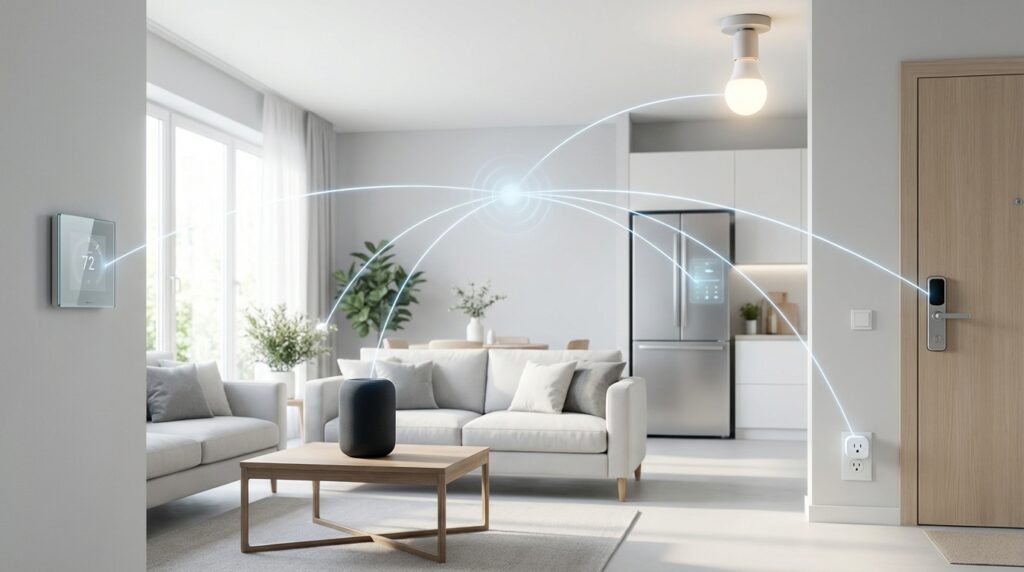
Welcome to your ultimate guide for building a connected home that just works. For years, choosing smart products meant worrying if they would play nicely with your existing setup. A new industry standard is changing that.
This universal language for your home allows gadgets from different brands to communicate seamlessly. It was created by tech giants like Apple, Google, and Amazon to end ecosystem lock-in. The goal is a simpler, more reliable experience.
Our guide cuts through the confusion. We provide a clear, current list of products you can buy today. You’ll see everything from smart lights and thermostats to sensors and appliances.
We also explain what true compatibility means for each type of gadget. You’ll learn which features work everywhere and which need a specific app. For a deeper dive into how this technology works, check out our explainer on the Matter protocol.
Whether you’re just starting out or expanding your system, this article will help. You can make confident choices for a unified and powerful smart home.
Key Takeaways
- A new universal standard enables seamless communication between products from different brands.
- This technology aims to simplify setup and reduce reliance on a single ecosystem.
- Many common product categories, like lighting and climate control, are now supported.
- Understanding the required infrastructure, like controllers, is key to a smooth experience.
- Look for official certification logos to ensure a product offers genuine cross-platform support.
- Some advanced features may still require using a specific brand’s application.
- This guide provides a practical, up-to-date list of verified compatible devices.
Introduction to the Matter Standard
The smart home landscape has undergone a revolutionary transformation with the arrival of a new connectivity framework. This industry-wide initiative represents a fundamental shift in how our homes communicate.
Major technology leaders joined forces to create this universal language. Their goal was to eliminate the frustrating barriers between different brand ecosystems.
What Matter Means for Smart Homes
For homeowners, this standard brings unprecedented flexibility. You can now mix and match products from various manufacturers with confidence.
Local operation becomes a key advantage. Your gadgets work directly within your home network rather than depending on distant servers. This approach enhances both speed and privacy.
Security receives top priority with built-in encryption. Every connection gets verified through robust authentication methods.
The Evolution of the Standard
The development journey involved extensive collaboration across the tech industry. Companies recognized that fragmentation was limiting consumer adoption.
Progress has been steady since the initial announcement. The specification now supports numerous product categories and continues expanding.
Setup simplicity represents another major improvement. QR code scanning replaces complex configuration processes. This user-friendly approach makes smart home technology accessible to everyone.
Exploring matter protocol devices in Modern Smart Homes
Today’s connected households are witnessing a significant shift in how different brands work together. The latest specification update from late 2024 has dramatically expanded what’s possible. You can now find certified options across nearly every major category.
Smart lighting and plugs lead the way with robust support. More complex items like robot vacuums and appliances are joining too. This gives consumers unprecedented choice when building their systems.
Manufacturers have taken varied approaches to implementation. Some companies released firmware updates for existing products. Others launched entirely new lines designed with native support from the start.
Identifying compatible gear is straightforward. Look for the official certification logo on packaging. Most items feature a QR code for simple setup.
Understanding connection methods is crucial for success. Some products work directly through Wi-Fi or Thread. Others need a proprietary hub or bridge to gain full functionality.
While the technology promises seamless integration, practical experience requires some technical knowledge. You’ll want to understand controllers and platform-specific limitations. This awareness helps set realistic expectations about current capabilities versus future updates.
The landscape continues evolving rapidly. Certain categories still lack certified options despite consumer demand. But the foundation is solid for creating a unified, reliable smart home that works across ecosystems.
Supported Device Types in the Matter Ecosystem
Building a connected home that truly works together starts with understanding the wide range of product categories now supported. The specification has expanded dramatically to include over forty different device types that can communicate seamlessly.
This growth means you can find certified options for nearly every smart home function you might want. From basic lighting to complex appliances, the ecosystem continues to mature rapidly.
Smart Lighting and Electrical Controls
Lighting represents the most established category within this new standard. You’ll find bulbs, strips, switches, and dimmers that offer reliable performance across all major platforms.
Basic on/off functionality works universally, while dimming and color control are also widely supported. Electrical controls like smart plugs provide similar straightforward operation for lamps and appliances.
Some products include energy monitoring features that may require platform-specific apps for full access. Outdoor lighting solutions are also joining the compatible lineup.
Thermostats, Locks, and Sensors
Climate control products like thermostats can adjust temperatures and change modes through the standard. The latest update added scheduling capabilities, though product availability is still growing.
Security devices including door locks provide basic lock/unlock functions everywhere. Advanced features like PIN codes may need specific platforms or manufacturer apps.
Sensors form a diverse group that includes motion detectors, contact sensors, and environmental monitors. These can trigger automations across different ecosystems, creating a truly responsive home environment.
The expansion into appliances and energy management shows the technology’s ambition to become the universal language for all connected products.
Device Features, Interoperability, and Benefits
Smart home interoperability goes beyond simple compatibility to deliver meaningful advantages that enhance daily living. Understanding these benefits helps you make informed choices about which products will work best in your setup.
Local Control and Enhanced Security
Local operation represents a significant improvement in smart home functionality. Your gadgets communicate directly within your home network rather than relying on distant servers.
This approach ensures your lights and other products respond instantly to commands. They continue working even if your internet connection experiences temporary issues.
Security receives top priority with built-in encryption for all communications. Every connection gets verified through robust authentication methods that protect your home from unauthorized access.
Cross-Platform Connectivity Explained
Cross-platform support allows you to control products through multiple ecosystems simultaneously. You can add a single light bulb to Apple Home, Google Home, and Amazon Alexa without buying separate versions for each system.
Basic features like on/off and dimming work universally across all platforms. However, advanced functionality such as dynamic lighting scenes or energy monitoring may require specific apps.
Platform implementation varies, creating different experiences across ecosystems. For comprehensive details about how this technology works, explore our guide on Matter implementation.
Major Manufacturers and Their Matter-Compatible Products
The technology giants leading the smart home revolution have fully embraced the new connectivity standard. These manufacturers provide the essential controllers that bring everything together in your home.
Apple, Google, and Amazon’s Role
Apple has positioned its HomePod Mini and second-generation Apple HomePod as powerful hubs with Thread support. These products work seamlessly with iPhones while maintaining cross-platform compatibility.
Google shows strong commitment through its Nest Hub lineup. Both the second-generation model and Nest Hub Max offer visual control alongside Thread connectivity. This creates a versatile control center for your connected home.
Amazon takes an aggressive approach with widespread Echo updates. Newer models like the Echo Show 8 and fourth-generation Echo include Thread radios. Older Echo devices provide Wi-Fi control, making Amazon’s ecosystem incredibly accessible.
Samsung, Aqara, and Other Innovators
Samsung’s SmartThings Station and Hub v3 offer robust Thread support. These hubs serve as reliable foundations for complex smart home setups.
Aqara stands out with exceptional two-way support. Their hubs bridge Zigbee devices to other ecosystems while bringing third-party products into the Aqara app. This flexibility makes Aqara products particularly valuable for mixed-brand homes.
Specialized manufacturers like Eve Systems build entire lines around Thread connectivity. Their sensors and smart plugs work directly without proprietary hubs. Companies like Nanoleaf, TP-Link, and Meross expand lighting and plug options.
The growing list of participating companies ensures abundant choice across all product categories. You can build a unified system that reflects your personal preferences.
Matter Controllers and Thread Border Routers
At the heart of every unified smart home lies a crucial component that bridges your smartphone commands with your household gadgets. This central unit serves as the command center for your entire setup.
You absolutely need a Matter controller to make everything work together. Think of it as the translator that helps different brands communicate smoothly.
Benefits of Thread-Enabled Devices
Thread technology creates a robust mesh network throughout your home. Products using this method offer exceptional reliability and extended battery life.
They form connections with nearby units, strengthening the overall system. This approach reduces dependence on your main Wi-Fi network for basic operations.
Commands travel quickly through the local mesh. Your lights respond instantly, and sensors report changes without delay.
Selecting the Right Controller for Your Home
Choosing the right hub depends on your existing ecosystem and future plans. Many people already own compatible controllers without realizing it.
Major companies have updated their smart speakers through software improvements. This means your current equipment might already support the new standard.
When picking a controller, consider Thread border router functionality. This feature allows you to connect low-power gadgets to your network. Our guide to smart light switches shows how different connection methods affect performance.
| Controller Type | Thread Border Router | Popular Models | Best For |
|---|---|---|---|
| Smart Speakers | Yes (Newer Models) | HomePod Mini, Echo 4th Gen | Voice Control Focus |
| Smart Displays | Mixed Support | Nest Hub Max, Echo Show 8 | Visual Interface Needs |
| Dedicated Hubs | Yes | SmartThings Station, Aqara Hub M3 | Advanced Automation |
| Media Streamers | Select Models | Apple TV 4K, Google TV Streamer | Entertainment Integration |
Remember that multiple Thread border routers can sometimes cause connection issues. If you experience problems, try disabling this feature on some units.
DIY Integration and Advanced Use Cases
Taking control of your smart home installation has never been more accessible for do-it-yourself enthusiasts. Many products now feature “DIY ready” labeling, indicating they’re designed for consumer installation without professional assistance.
This approach saves money while giving you complete customization freedom. You can build systems that perfectly match your lifestyle and preferences.
Tips for a Seamless DIY Smart Home Setup
Thread-based products offer significant advantages for DIY installations. They create self-healing mesh networks that automatically route around dead spots.
This technology is more forgiving than Wi-Fi dependent gear. Your system maintains reliability even with imperfect device placement.
Platforms like Home Assistant provide powerful integration options for certified products. They support every device type and offer automation capabilities beyond mainstream platforms.
Start with simple components like smart plugs and bulbs to learn the setup process. These require minimal technical knowledge and provide immediate functionality.
Graduate to more complex installations like smart locks after gaining confidence. Always ensure proper infrastructure before adding products.
You’ll need a controller with Thread border router capabilities for optimal performance. A strong home network forms the foundation for reliable operation.
Many enthusiasts appreciate how easily certified products reset and move between ecosystems. This flexibility allows experimentation with different platforms.
Combining these products with advanced systems opens incredible customization possibilities. You can create complex automations and integrate with non-certified gear through bridges.
The Future of Matter: Upcoming Devices and Trends
The evolution of smart home connectivity continues to accelerate with exciting developments on the horizon. Recent specification releases have expanded what’s possible in unified home automation.
Over-the-Air Updates and Emerging Innovations
One of the most consumer-friendly features is over-the-air firmware updates. This allows companies to add support to products you already own.
Many existing gadgets can receive compatibility through simple software improvements. This approach effectively future-proofs your investment in smart home technology.
The recent specification update brought crucial support for energy management systems. This includes solar panels, home battery storage, and electric vehicle chargers.
Looking at announcements from various manufacturers reveals a robust pipeline of upcoming products. Categories with limited options today will see expanded choices soon.
Security cameras represent a highly anticipated addition once the specification finalizes. More comprehensive appliance support is also in development.
The trend toward adoption is accelerating as consumers prefer cross-platform compatibility. Even traditionally closed ecosystems are opening up to remain competitive.
Emerging innovations include sophisticated multi-protocol communication. Some products can use Thread, Wi-Fi, and Zigbee simultaneously for optimal performance.
As the ecosystem matures, this standard will likely become the default expectation. Much like Wi-Fi became standard in electronics, unified connectivity will transform smart homes.
Comparative Analysis: Matter Versus Other Smart Home Standards
The arrival of a unified connectivity framework raises important questions about its relationship with existing smart home protocols. How does this new approach compare to technologies that have served homeowners for years?
Advantages and Possible Limitations
This universal standard excels at multi-platform interoperability. Unlike proprietary systems, it lets you mix products from different brands without ecosystem lock-in.
Existing technologies like Zigbee and Z-Wave create reliable mesh networks with excellent battery life. The new framework doesn’t replace these protocols but works alongside them through bridge devices.
Platform implementation varies significantly across ecosystems. Some controllers offer comprehensive device type support while others have more selective compatibility.
Advanced functionality represents a current limitation. Manufacturers’ native apps often provide sophisticated capabilities that standardized feature sets can’t yet replicate.
| Standard Type | Primary Strength | Platform Support | Best Use Case |
|---|---|---|---|
| Matter | Cross-platform interoperability | Varies by ecosystem | Mixed-brand smart homes |
| Zigbee/Z-Wave | Reliable mesh networks | Hub-dependent | Whole-home automation |
| Proprietary Systems | Advanced feature integration | Single ecosystem | Brand-loyal setups |
For professional installations, established protocols sometimes offer better reliability and configuration options. The long-term advantage lies in future-proofing your investment as the specification continues evolving.
Practical Setup: How to Start Using Matter Devices
The process of integrating standardized smart home equipment is designed for user-friendly installation. You’ll need matter device compatibility and the right controller to get started.
Step-by-Step Guide to Integrating Your Devices
First, ensure you have an appropriate controller for your chosen platform. Apple users need an Apple HomePod or Apple TV 4K. Google enthusiasts require a Nest Hub or similar Google Nest product.
Amazon Alexa supporters can use Echo Show models or newer Echo devices. Samsung SmartThings requires their dedicated hub.
When adding your first devices matter compatible product, simply scan the QR code with your smartphone app. The commissioning process handles configuration automatically.
“The beauty of this standard is that setup takes minutes, not hours. Scanning a code replaces complex technical configurations that previously frustrated homeowners.”
For thread-based equipment, verify your controller includes thread border router functionality. iPhone users have a unique advantage with built-in thread support.
Selecting the Best Smart Home Platform
Choosing your primary platform depends on your existing ecosystem and preferences. Each system offers distinct advantages for different user needs.
| Platform | Required Controller | Key Strength | Ideal For |
|---|---|---|---|
| Apple Home | Apple HomePod, Apple TV | Privacy & Ecosystem Integration | iPhone/Mac Users |
| Google Home | Nest Hub, Google Nest Speakers | Voice Recognition & Nest Products | Android/Google Users |
| Amazon Alexa | Echo Show, Echo Devices | Skills Library & Device Support | Broad Compatibility Needs |
| Samsung SmartThings | SmartThings Hub | Advanced Automation | Power Users |
After setup, you can share devices across platforms by scanning the same QR code. This enables multi-ecosystem control without reconfiguration.
Conclusion
As we’ve explored throughout this guide, the path to seamless home automation is clearer than ever before. The extensive list of compatible products shows real momentum toward unified connectivity.
While perfect interoperability across all platforms remains a work in progress, the foundation is solid. Major manufacturers and specialized brands alike are building support into their newest offerings.
This diversity ensures you can find the right gear for your specific needs and budget. Whether you prefer Apple, Google, Amazon, or other ecosystems, choices abound.
For those wanting to understand the technical details behind this progress, our guide on how this connectivity standard works provides deeper insights. The smart home landscape continues evolving rapidly.
Prioritizing compatible products today sets you up for a flexible, future-ready setup. You’ll enjoy tangible benefits now with even better integration ahead.