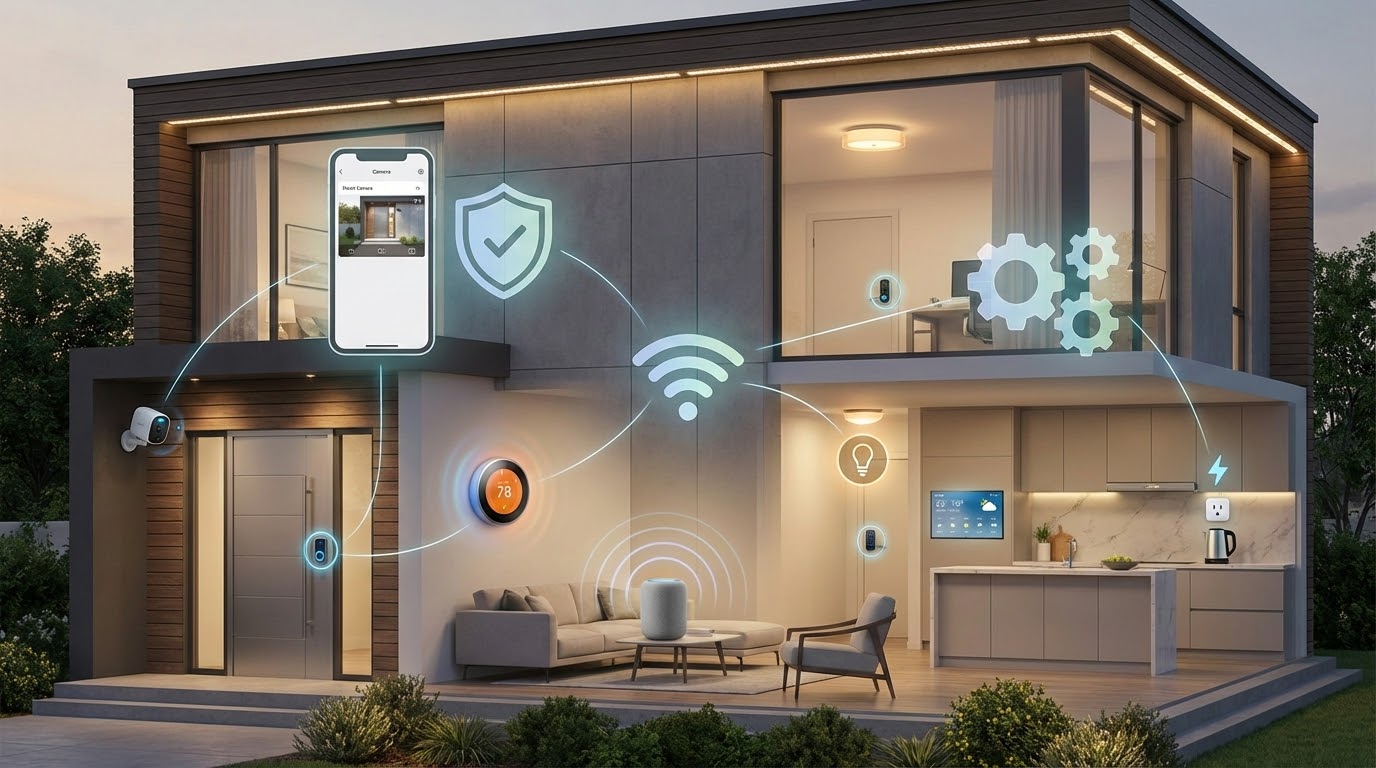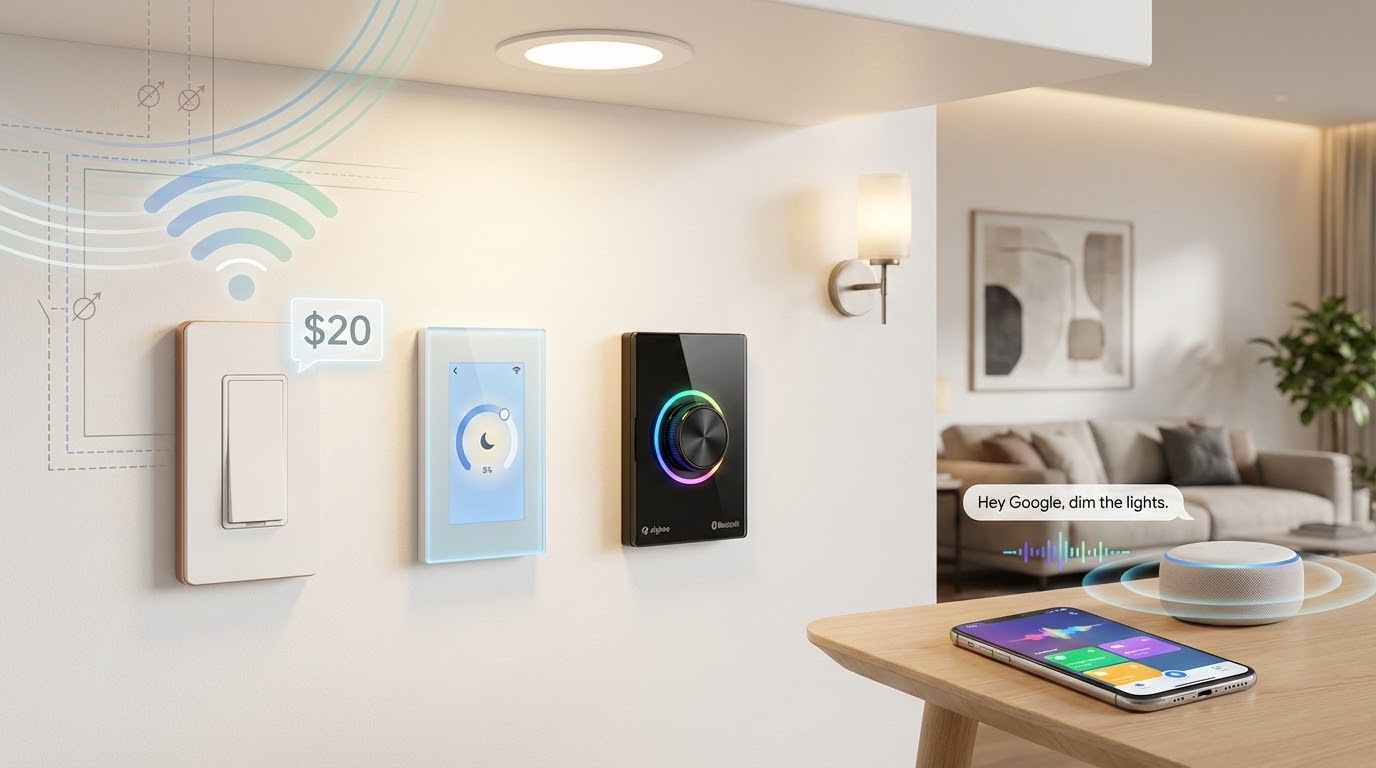
Upgrading your home’s lighting control can transform how you interact with your living space. Modern devices offer convenient ways to manage illumination throughout your property.
These upgrades provide a practical alternative to replacing every individual bulb. This approach works especially well for houses with multiple fixtures like recessed lights or wall sconces.
Today’s advanced models integrate smoothly with daily routines. They offer features like remote control through mobile apps and voice commands. Many work with popular home automation systems.
Our guide explores products across various price points. You’ll find economical choices under twenty dollars alongside premium selections with extra capabilities. We examine different connection methods including Wi-Fi and emerging standards.
Installation factors receive detailed attention. We cover wiring requirements and multi-location configurations. The information helps determine whether to tackle setup yourself or hire a professional.
Key Takeaways
- Upgrading lighting control enhances home convenience and functionality
- These devices offer cost savings compared to full bulb replacement
- Modern units work with voice commands and mobile applications
- Products are available for different financial constraints
- Various connectivity options suit different home setups
- Installation requirements vary by model and home wiring
- Professional guidance helps match products to specific needs
Introduction: The Evolution of Smart Home Lighting
The humble wall switch has undergone a remarkable transformation from basic mechanical device to intelligent home controller. For over a century, traditional models served homes faithfully as simple mechanical devices.
| Era | Technology | Key Features | Limitations |
|---|---|---|---|
| Early 20th Century | Manual Toggle | Basic on/off function | Single location control only |
| Mid 20th Century | Rotary Dimmer | Adjustable brightness | No remote access |
| Late 20th Century | Digital Controls | Programmable timers | Limited automation |
| 21st Century | Connected Devices | Remote access, voice control | Wiring compatibility issues |
Modern units maintain the familiar form factor homeowners expect. They add layers of digital control through smartphone apps and voice assistants. Automated schedules create convenience throughout the day.
The technology enables management from anywhere with internet access. Homeowners can adjust illumination while away for security purposes. This represents a significant shift in daily routines.
Integration with home platforms transforms functional lighting into customizable ambiance. Early solutions required expensive bulb replacements. Today’s approach controls multiple fixtures economically from one point.
Current generation products offer motion detection and energy monitoring. They work with multiple ecosystems simultaneously. These devices serve as gateway introductions to broader home automation possibilities.
Understanding Smart Light Switches
Today’s connected homes rely on devices that maintain traditional appearance while offering digital convenience. These components fit standard electrical boxes and operate like conventional models.
A smart switch provides remote management through mobile applications. Users can adjust illumination from anywhere with internet access. Voice commands work with popular assistants like Alexa and Google Home.
Unlike bulb-based solutions, these units control power at the wall level. Manual operation remains available alongside digital methods. This dual functionality ensures reliability during network outages.
Scheduling features automate daily routines. Lights turn on at sunset or off at bedtime automatically. Vacation modes enhance security by simulating occupancy patterns.
Installation requires basic electrical knowledge. Most models need neutral wires for proper operation. Professional help ensures safe setup for complex configurations.
Compatibility extends to various bulb types including LED and incandescent options. Once installed, the system works independently of specific light sources. This approach offers long-term value and flexibility.
Key Features and Benefits
Today’s advanced electrical controls offer unprecedented convenience through digital integration. These modern devices transform basic illumination management into sophisticated home automation.
| Feature Category | Primary Function | User Benefits | Common Applications |
|---|---|---|---|
| Remote Access | Control from anywhere | Convenience and security | Vacation lighting, bedtime control |
| Scheduling | Automated routines | Energy savings, daily convenience | Sunset activation, security patterns |
| Voice Integration | Hands-free operation | Accessibility, multitasking | Kitchen use, mobility assistance |
| Energy Monitoring | Usage tracking | Cost reduction awareness | Budget management, efficiency optimization |
| Scene Creation | Custom configurations | Ambiance control | Entertainment settings, reading modes |
Remote access functionality allows adjustment of illumination from any location. Homeowners can manage their property’s lighting through mobile applications while away.
Scheduling capabilities automate daily routines based on time or sunset patterns. This creates consistent illumination without manual intervention each day.
Voice command integration works with popular assistants like Alexa and Google Home. Users can operate their systems hands-free when carrying items or needing accessibility.
Energy monitoring features track electricity consumption patterns. This data helps identify opportunities for reducing utility costs through optimized usage.
Dimming functionality provides precise brightness adjustment for different activities. It extends bulb lifespan while creating appropriate room atmospheres.
Scene programming enables instant room transformations with single commands. Different configurations suit various activities like movie watching or dinner parties.
Multi-room grouping allows simultaneous control of illumination throughout the property. Whole-home scenes create cohesive environments for different occasions.
Away modes enhance security by simulating natural occupancy patterns. Randomized lighting deters potential intruders during extended absences.
Best Smart Light Switches for Modern Smart Homes
Homeowners exploring automated lighting systems will find diverse options with different features and installation requirements. The market offers products across various price points and compatibility levels.
TP-Link’s Kasa KS225 Matter Wi-Fi Dimmer provides excellent value with universal platform support. This device works seamlessly with Alexa, Google Home, and Apple HomeKit through Matter technology. Installation requires neutral wiring for proper operation.
For older properties lacking neutral wires, Leviton’s Decora No-Neutral Dimmer offers a specialized solution. This model needs a separate Wi-Fi bridge for full functionality. It serves homes built before modern wiring standards.
Key product considerations include:
- Universal compatibility with major home platforms
- Wiring requirements for different home ages
- Additional hardware needs like bridges or hubs
- Special features like motion sensing or weather-based scheduling
GE’s Cync model includes built-in motion detection and ambient light sensors. Lutron’s Diva Dimmer offers premium construction but requires a dedicated hub. Z-Wave enthusiasts can explore Leviton’s Z-Wave compatible options.
Budget-friendly choices exist under twenty dollars while maintaining core functionality. These economical selections sacrifice some advanced features but provide reliable basic control. Premium models justify higher costs with extensive integration capabilities.
Each product suits specific home configurations and user preferences. Consider your existing system compatibility and wiring situation before selecting. Professional installation ensures optimal performance for complex setups.
Connectivity and Compatibility: Integrating Smart Switches With Your System
Choosing the right communication method for your automated lighting is crucial for seamless integration. Modern devices typically connect through Wi-Fi, Z-Wave, or Zigbee protocols. Each approach offers distinct advantages for different home setups.
Wi-Fi models connect directly to your home network without additional hardware. This simplifies setup and reduces initial costs. Control happens through manufacturer apps from anywhere with internet access.
Z-Wave and Zigbee protocols require dedicated hub devices for communication. Popular options include Samsung SmartThings and Ring Alarm systems. These hub-based networks continue functioning during internet outages.
The emerging Matter standard promises universal cross-platform compatibility. Matter-certified units work with Alexa, Google Home, and Apple HomeKit simultaneously. This eliminates traditional compatibility verification needs.
Manufacturer apps vary significantly in features and user experience. Some offer advanced scheduling and energy monitoring capabilities. Others prioritize simplicity for straightforward control.
Selecting between Wi-Fi and hub-based systems depends on existing infrastructure. Consider reliability requirements and future expansion plans. Premium manufacturers like Lutron maintain proprietary systems with exceptional integration.
Dimmer Functions and On/Off Controls Explained
Variable brightness management represents a significant upgrade over simple on/off functionality. These devices allow precise control over room atmosphere and energy consumption.
Modern dimmer switches work with various bulb types including LED, CFL, and incandescent options. Some models also support Magnetic Low Voltage lighting systems. Always verify specific compatibility since some LEDs perform poorly with certain dimmers.
A critical installation rule involves avoiding smart dimmers with smart bulbs. This combination causes flickering, flashing, or buzzing sounds. The devices conflict electronically, resulting in failed dimming functionality.
When controlling non-dimmable lights, these units operate as standard on/off switches. They provide remote access and scheduling without brightness adjustment capabilities.
Advanced models offer customization options for enhanced user experience:
- Fade rate adjustment controls how quickly illumination transitions between levels
- Minimum and maximum brightness thresholds prevent unusable settings
- Multiple control mechanisms including sliders, dials, or button interfaces
Energy savings from dimming can be substantial. Reducing output by 25% typically decreases consumption by approximately 20%. This approach also extends bulb lifespan significantly.
Installation requires attention to wiring complexity and load requirements. Manufacturers specify minimum and maximum wattage ratings for proper operation.
No-Neutral Versus Neutral Wiring Considerations
The presence or absence of a neutral wire in your switch box determines which models will work in your home. This electrical requirement represents a critical compatibility factor for automated lighting controls.
Many modern devices need a neutral connection to power their internal electronics. The neutral wire provides a return path for electrical current. This allows the unit to maintain wireless connectivity even when lights are turned off.
| Feature | Neutral Wire Required | No-Neutral Option | Installation Complexity |
|---|---|---|---|
| Power Source | Direct from wiring | Requires alternative path | Standard vs specialized |
| Home Compatibility | Post-1980s construction | Older homes | Wiring verification needed |
| Additional Hardware | Usually none | Bridge or hub often required | Extra components needed |
| Box Space | Bulkier electronics | Similar size constraints | Crowded box issues |
| Cost Factor | Standard pricing | Often higher with accessories | Professional help may cost more |
Homes built before the 1980s frequently lack neutral wires at switch locations. Traditional mechanical controls only needed hot and load wires. This limitation doesn’t eliminate automation possibilities.
Manufacturers like Leviton offer specialized no-neutral models. These devices use alternative methods to complete the electrical circuit. The DN6HD model requires a separate Wi-Fi bridge for full functionality.
Before purchasing any unit, homeowners should examine their existing wiring. Remove the cover plate and look for a bundle of white wires connected together. This indicates neutral wire availability.
These automated controls contain more electronics than traditional ones. They require deeper electrical boxes for proper installation. Crowded boxes benefit from screw terminal connections rather than wire leads.
Some municipalities have specific code requirements for box sizes. Checking local regulations prevents installation issues. Professional electricians can add neutral wires or install larger boxes if needed.
Installation and DIY Tips for Smart Light Switches
Proper installation of automated wall controls requires careful preparation and safety awareness. This process involves both physical wiring work and digital configuration steps.
Safety begins with turning off power at the circuit breaker. Always verify electricity is off using a voltage tester before touching wires. This prevents dangerous electrical shocks during the installation.
| Installation Scenario | Recommended Approach | Time Estimate | Skill Level Required |
|---|---|---|---|
| Single switch replacement | DIY with basic tools | 15-30 minutes | Beginner with electrical comfort |
| Crowded electrical box | Choose terminal-style units | 30-45 minutes | Intermediate experience |
| Three-way configuration | Professional assistance | 60-90 minutes | Advanced electrical knowledge |
| No neutral wire present | Specialized models or electrician | 45-60 minutes | Professional recommended |
Essential tools include screwdrivers, wire strippers, and needle-nose pliers. A flashlight helps visibility inside dark electrical boxes. First-time installers should allow extra time for learning.
The installation process follows clear steps. Remove the old device and identify each wire. Connect wires according to the diagram provided with your new unit.
After physical installation, complete the app-based setup. This includes network connection and voice assistant integration. Test all functions before securing the unit completely.
Professional help is wise for complex situations. This includes three-way setups or wiring modifications. Local electrical codes may require licensed electricians for certain work.
Voice Control and Integration With Smart Home Assistants
Voice commands transform basic wall controls into interactive home management systems. These devices work with Amazon Alexa, Google Assistant, and Apple Siri through HomeKit integration. Natural language processing allows intuitive spoken commands.
Setup involves linking the manufacturer’s app with your preferred voice assistant. Account authorization connects the systems automatically. The assistant discovers connected devices and adds them to its inventory.
Room assignment within voice apps enables natural commands. Users can say “turn off the lights” when in a specific space. This eliminates the need to remember exact device names.
Command capabilities extend beyond simple on/off functions:
- Dimming adjustments to specific percentage levels
- Scene activation for different room atmospheres
- Scheduling through voice-based routines
- Multi-room control with single commands
Advanced automation combines voice commands with other conditions. Time of day and presence detection can trigger illumination changes. These routines create sophisticated home environments.
Voice control provides significant accessibility benefits. Individuals with mobility challenges find hands-free operation invaluable. The technology assists those who struggle with physical interfaces.
Compatibility verification remains crucial before purchase. Not all units support every voice platform. Check your preferred assistant’s requirements for seamless integration.
Response times typically range from one to three seconds. Network speed and connection method affect performance. Wi-Fi models may respond differently than hub-based systems.
Motion Sensors and Advanced Automation Features
Advanced sensors integrated into wall controls eliminate manual operation through automated presence detection. These devices automatically turn lights on when detecting movement and off after predetermined periods of inactivity. This functionality enhances both convenience and energy efficiency throughout the home.
Motion sensor integration proves especially practical for high-traffic areas. Hallways, bathrooms, stairways, and garages benefit from hands-free operation. These locations often see forgotten illumination that wastes electricity unnecessarily.
Premium models like the Leviton Decora Smart Motion Sensing Dimmer combine movement detection with ambient light sensors. This prevents unnecessary activation during daylight hours. The GE Cync Motion Sensing Switch offers similar capabilities for different home setups.
Customization options allow users to adjust sensitivity levels and timeout durations. Settings typically range from 30 seconds to 30 minutes based on room usage patterns. Brightness levels can also be programmed for different times of day.
Integration with home automation systems enables sophisticated scenarios. Motion detection can trigger thermostats, security cameras, or audio announcements. This creates cohesive smart home experiences beyond basic illumination control.
Placement considerations affect performance significantly. Units positioned with clear room views maintain illumination during occupancy. Those with obstructed sightlines may fail to detect continued presence effectively.
Product Roundup: Top Smart Switch Contenders Reviewed
Selecting the right wall controller involves balancing features, compatibility, and cost considerations. This comparison examines standout models across different price ranges and functionality levels.
The TP-Link Kasa KS225 Matter Dimmer offers excellent value around $40-50. It supports Matter technology for universal platform integration. This three-button design requires neutral wiring for installation.
Leviton’s Decora Motion Sensing Dimmer combines presence detection with brightness control. It works with Alexa, Google Home, and Apple HomeKit. Homeowners appreciate the automated convenience and energy savings.
| Product | Price Range | Key Feature | Compatibility | Installation Requirement |
|---|---|---|---|---|
| Kasa Smart HS200 | Under $20 | Basic on/off control | All major platforms | Neutral wire needed |
| GE Cync Motion Dimmer | $40-60 | Motion + ambient light sensing | Alexa, Google Assistant | No hub required |
| Lutron Diva Dimmer | Premium | Widest device support | All major platforms | Requires Lutron hub |
| Philips Hue Tap Dial | $50-60 | Wireless with dimmer dial | Hue ecosystem only | Adhesive or screw mount |
| SwitchBot Bot | $30-40 | Physical switch presser | Works with any switch | No wiring needed |
Budget-conscious shoppers find the Kasa HS200 appealing at under twenty dollars. It provides reliable control without dimming capabilities. Matter support ensures long-term compatibility.
Lutron’s Diva Dimmer justifies its premium cost with exceptional build quality. It works without neutral wires and comes in multiple colors. The required hub enables extensive integration possibilities.
Philips offers two options for Hue system owners. The Tap Dial provides advanced control with customizable buttons. The more affordable Dimmer Switch handles basic brightness adjustment.
Unique solutions like SwitchBot Bot attach to existing controls. This motorized device physically toggles traditional switches. Renters appreciate the non-invasive installation approach.
Each product serves specific user needs and home configurations. Consider your existing setup and desired features when making a selection. The right choice depends on individual priorities and budget constraints.
Design, Aesthetics, and Usability in Home Décor
Homeowners today can choose from an array of design-forward lighting controllers that enhance room decor. These devices come in paddle, rocker, toggle, and multi-button styles.
Each design offers different visual appeal and functional benefits. The right choice depends on personal preference and existing home aesthetics.
| Design Style | Visual Characteristics | User Experience | Room Applications |
|---|---|---|---|
| Paddle Switch | Minimalist, flush appearance | Easy press operation | Modern living spaces |
| Rocker Design | Traditional rectangular form | Familiar rocking motion | Transitional interiors |
| Toggle Style | Classic lever appearance | Distinct on/off positions | Traditional homes |
| Multi-button Panel | Technology-forward look | Multiple control options | High-tech environments |
Color selection remains important for wall integration. White dominates most product lines for universal compatibility.
Premium manufacturers like Lutron Diva offer expanded palettes. These include black, ivory, and light almond finishes.
Physical controls vary from traditional sliders to rotating dials. Some feature touch-sensitive surfaces for contemporary appeal.
LED indicators provide status information about power and connectivity. Many models include options to dim or disable these lights.
Wireless units offer exceptional placement flexibility. They can be wall-mounted or used as portable remotes.
This adaptability suits rental properties and changing needs. Battery-operated options avoid permanent modifications.
The tactile experience influences daily satisfaction. Some users prefer physical button feedback.
Others appreciate smooth dimmer controls for precise adjustment. Multi-gang installations require careful planning.
Proper spacing ensures cohesive visual appearance. This prevents cluttered, mismatched groupings on the wall.
Future Trends in Smart Switching Technology
The future of home lighting control is evolving toward universal compatibility and intelligent automation. The Matter protocol represents the most significant development in this technology. This open-source standard promises to eliminate compatibility concerns across different platforms.
Matter-enabled devices work seamlessly with Amazon Alexa, Google Home, Apple HomeKit, and Samsung SmartThings simultaneously. Early adoption by manufacturers like TP-Link and Leviton demonstrates industry commitment. More brands will release certified products throughout upcoming years.
Energy monitoring features are becoming increasingly common in modern systems. Homeowners can track electricity consumption patterns for efficiency improvements. Integration with renewable energy systems represents an emerging application.
Artificial intelligence capabilities are beginning to appear in lighting control. These systems learn household patterns without explicit programming. Enhanced security features address growing privacy concerns through encrypted communication.
The convergence of lighting with other building systems points toward holistic automation. Sustainability considerations influence product development for longer device lifespans. Thread networking protocol promises more reliable mesh networks with lower power consumption.
These advancements will transform how we interact with our living spaces. The technology continues to evolve toward more intuitive and integrated solutions.
User Experiences and Expert Testing Insights
Real-world testing provides the most valuable information about how these devices perform. Experts have evaluated dozens of models in actual homes. This hands-on approach reveals insights that specifications alone cannot show.
The setup process varies widely between different products. Wi-Fi models typically offer simpler installation. Hub-based systems often require more steps to get them working properly.
App quality significantly affects daily use. Well-designed interfaces make scheduling and scene creation intuitive. Poor app design can frustrate users and limit functionality.
Response time is a critical performance metric. The fastest units execute commands within one to two seconds. Slower models exhibit noticeable delays that reduce satisfaction.
Motion sensor reliability differs across brands. Premium options demonstrate consistent detection and appropriate timeout behavior. Budget alternatives sometimes miss occupancy or trigger false activations.
Dimming performance separates adequate devices from excellent ones. Smooth transitions and flicker-free operation characterize top performers. Lesser models may exhibit buzzing or limited dimming ranges.
Long-term reliability testing over months and years shows important patterns. Established manufacturers maintain consistent performance. Some newer market entrants experience higher failure rates over time.
Customer service quality becomes crucial when issues arise. Some companies receive praise for responsive support. Others frustrate users with difficult-to-reach service departments.
Network stability varies between connection types. Wi-Fi models may occasionally drop connections. Hub-based systems often maintain more consistent local control.
Voice integration quality depends on both the device and the assistant. Proper device naming and room assignment improve recognition accuracy. This enhances the overall user experience significantly.
Comprehensive Buying Guide: Finding the Perfect Fit for Your Home
Making the right choice for your home automation starts with understanding your specific lighting setup. The fundamental decision between automated controllers and intelligent bulbs depends on your fixture configuration.
Controllers prove more economical for multiple built-in fixtures. Intelligent bulbs work better for lamps and color-changing applications.
Check your electrical box for neutral wires before purchasing any device. Remove an existing cover to inspect for white wires bundled together. This determines which models will function in your home.
Budget considerations should include potential additional expenses. Account for electrical box upgrades, professional installation fees, and required hubs. Platform compatibility must align with your existing ecosystem.
Three-way configurations need specific compatible models. Some manufacturers offer wireless companion units that eliminate complex wiring. This adds placement flexibility without additional electrical work.
Dimming capability represents an important feature consideration. Basic on/off models cost less than variable brightness controllers. Retrofitting later requires additional purchase and installation effort.
Motion sensor value varies significantly by room location. These features work well in bathrooms, hallways, and garages. They may prove annoying in bedrooms or home theaters.
Hub requirements influence both cost and reliability. Hubless Wi-Fi devices offer simpler setup but potentially less stable connections. Hub-based systems maintain local control during internet outages.
Future-proof through Matter compatibility whenever possible. This ensures your investment will work with emerging platforms. Aesthetic preferences matter for visible units in prominent locations.
Conclusion
Modern lighting controllers offer an accessible entry point into home automation with immediate practical benefits. These devices deliver remote access, scheduling, and voice commands while working with your existing fixtures.
The market provides diverse options from basic models to premium units with advanced features. Choosing requires balancing wiring compatibility, desired functions, and budget considerations.
Installation ranges from simple DIY projects to situations needing professional help. The emerging Matter standard simplifies future compatibility across different platforms.
These controllers provide economical whole-room management compared to bulb-based solutions. Prioritize features based on actual usage patterns to maximize value from your investment.
Whether upgrading one location or your entire property, these devices deliver tangible improvements in convenience and efficiency. They represent a worthwhile enhancement to any modern living space.
FAQ
What is the main difference between a smart switch and a smart bulb?
A smart bulb replaces your existing bulb and gives you control over that single fixture, often with color options. A smart dimmer or switch replaces your wall control, allowing you to operate all the lights connected to that circuit, including standard bulbs, using your smartphone or voice commands.
Do I need a special hub for these devices to work?
It depends on the product. Some options connect directly to your home’s Wi-Fi network, while others require a dedicated hub, like a Zigbee or ZThread system, for operation. Hub-based products can offer greater reliability and more advanced automation features.
Can I install one of these if my wall box doesn’t have a neutral wire?
Yes. Many manufacturers now offer no-neutral models designed for older homes. These products work by allowing a small amount of current to flow through the circuit to power themselves. It’s crucial to check the product specifications before purchasing to ensure compatibility with your home’s wiring.
How do dimmer functions work with modern LED bulbs?
Not all LED bulbs are dimmable. For smooth performance, you need a compatible dimmable LED bulb and a switch designed for low-wattage LED lighting. Using non-dimmable bulbs with a dimmer can cause flickering or damage the product.
Will these work with my Google Home or Alexa system?
Most contemporary models support integration with major platforms like Google Assistant and Amazon Alexa for voice control. Look for products that explicitly state compatibility with your preferred assistant to ensure seamless operation.
What are the benefits of having motion sensors built into a wall control?
Switches with integrated motion sensors add a layer of convenience and energy efficiency. They can automatically turn lights on when you enter a room and off after you leave, which is ideal for spaces like laundry rooms, pantries, and hallways.
Is this a difficult DIY project for a beginner?
If you are comfortable working with electrical wiring and have turned off the power at the circuit breaker, installation can be straightforward. However, if you are unsure about any step, hiring a qualified electrician is the safest choice to ensure everything is connected properly.