
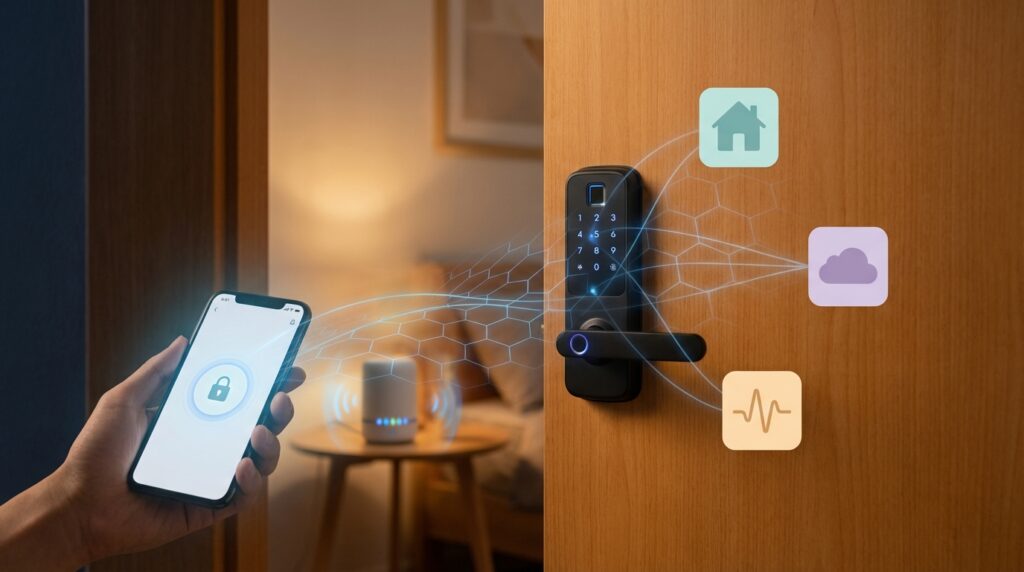
Welcome to the future of home access. This guide explores a new generation of connected entry systems. We focus on how a universal standard is changing the game for security and convenience.
You will learn about the underlying technology that powers these innovative products. We also evaluate how they perform in everyday situations. Our goal is to help you make a confident choice for your household.
These modern entry solutions offer a key-free lifestyle. They provide enhanced control and remote access capabilities. This makes them a practical upgrade for any residence.
The Matter protocol is a major leap forward. It creates a single standard so devices from different brands work together seamlessly. This eliminates compatibility headaches across various platforms.
We will compare different lock mechanisms used around the world. Our review covers top brands, platform compatibility, and daily reliability. For a look at a leading product, consider the advanced smart lock from Level.
Key Takeaways
- A new universal standard is simplifying connected home security.
- Modern entry systems eliminate the need for traditional keys.
- Interoperability across different brands and platforms is now a reality.
- Real-world performance depends on factors like battery life and reliability.
- Understanding the technology helps you choose the right product for your home.
- Upgrading your entry system can provide enhanced control and remote access.
Overview of Matter and Smart Home Integration
Imagine a home where every gadget understands each other perfectly. This is the promise of a unified standard for connected living. It simplifies setup and creates a more responsive environment.
This new approach breaks down old barriers between brands. You gain incredible flexibility in choosing products.
Understanding the Matter Protocol
The Matter protocol acts as a universal language for your home. It allows different brands to communicate seamlessly. This is a major shift from the fragmented systems of the past.
Reliability is a key feature. It uses Thread technology to create a robust mesh network. Your devices talk directly to each other, not just through the cloud.
This means your automations keep running even if the internet fails. You maintain local control over lights and entry systems. It’s a more dependable way to build a connected home.
Benefits of a Connected Smart Home
A truly integrated home offers more than just convenience. You can achieve better energy efficiency and enhanced security. Your routines can automatically adapt to your daily life.
The best part is freedom of choice. You are no longer restricted to one company’s ecosystem. Mix and match your favorite products with confidence.
Major platforms like Apple Home, Google Home, and Amazon Alexa support this standard. This ensures broad compatibility for all your home devices.
| Feature | How Matter Works | Benefit for You |
|---|---|---|
| Universal Compatibility | Serves as a common language for all brands | Freedom to choose any certified product |
| Local Connectivity | Uses Thread to create a device mesh network | Systems work reliably, even without internet |
| Platform Integration | Supported by all major smart home platforms | Use your preferred assistant and apps |
Deep Dive into Smart Lock Security Setup
The installation of a modern entry system is a surprisingly simple process. Getting started is as easy as scanning a QR code with your phone. This standardized approach removes the guesswork from the setup.
It connects your new device directly to your preferred home platform. This is a key benefit of the universal Matter standard.
Essential Security Features and Installation Considerations
When evaluating security, the deadbolt is the most important part. This piece of metal is what physically secures your door.
It must meet high-grade certifications for strength. Many models exceed typical residential standards.
Your method of access is also vital. Modern systems offer several secure options beyond a traditional key.
| Method | How It Works | Best For |
|---|---|---|
| PIN Codes | Enter a unique number on a keypad | Granting temporary access to guests |
| Fingerprint Recognition | Scans your unique fingerprint | Fast, keyless entry for household members |
| Smartphone Access | Uses your phone as a digital key | Convenience and remote control |
Installation time is often short. Most homeowners can complete it in under 30 minutes. You just need to check your door thickness and existing lock configuration first.
For a broader look at connecting devices, see our guide for your first smart home setup.
Advanced security features like tamper alerts add another layer of protection. They notify you instantly of any forced entry attempts on your door.
Comprehensive Roundup of Matter Smart Locks
Choosing the right connected entry device requires understanding regional differences in door hardware. The global market has expanded significantly, with manufacturers developing products that cater to various door mechanisms and consumer preferences.
European vs. Anglo-American Lock Mechanisms
European doors typically use mortise systems that combine two locking elements. These include a spring-loaded latch and a solid deadbolt in one housing.
The latch automatically engages when the door closes, keeping it shut without locking. Only when the deadbolt extends does the door become truly secure. Since Matter 1.2, these systems can recognize three states: locked, unlocked, and unlatched.
Anglo-American systems operate differently. They feature separate mechanisms for the latch and deadbolt. Connected devices typically control only the deadbolt in two states.
Top Brands and Their Key Models
Leading manufacturers offer diverse products for different markets. Nuki dominates in Europe with models like the Smart Lock Pro supporting Thread connectivity.
The Anglo-American market features broader selection. Options include Level Lock Pro’s minimalist design and Kwikset Halo Select’s traditional styling.
Connection methods vary across products. Most use Thread protocol requiring a border router. Some models employ proprietary hubs as Matter bridges.
When evaluating these devices, consider design aesthetics, security features, and battery life. Ensure the model matches your region’s door mechanism for optimal performance.
Integration with Smart Home Platforms and Compatibility
The true power of modern home security lies in seamless ecosystem integration. These connected entry systems work across major smart home platforms, giving you incredible flexibility.
Universal compatibility means your choice of home platforms doesn’t limit your security options. You can mix and match products with confidence.
Seamless Connection with Leading Ecosystems
Apple Home currently offers the most comprehensive feature set. Users enjoy full access code management and battery monitoring through the native app.
Amazon Alexa provides reliable basic control functionality. However, advanced features require the manufacturer’s application.
Google Home integration is more limited but improving. Basic lock/unlock commands work well through this platform.
Samsung SmartThings strikes a good balance between features and compatibility. It supports code management and status monitoring.
Optimizing Setup Using Supported Hubs
To enable this universal integration, you’ll need a compatible hub or border router device. Popular options include Apple TV 4K and Amazon Echo devices.
The setup process is beautifully simple across all platforms. Just scan the provided QR code using your preferred smart home app.
Voice control works consistently with Siri, Alexa, and Google Assistant. Each supports basic commands for convenient access.
For optimal performance, many users combine platform integration with the manufacturer’s app. This hybrid approach delivers the best of both worlds.
Real-World Performance and User Experience
Living with a connected entry system reveals its true value through daily interactions. How these devices perform when you need them most determines whether they become indispensable household tools.
Evaluating Daily Use and Battery Life
Battery performance varies across different models. Most use standard AA or CR123A cells that typically last six to twelve months.
Usage frequency directly impacts how long your power source lasts. Some advanced models offer rechargeable options for added convenience.
Low battery alerts help you stay prepared. These notifications appear in your preferred home platform application.
Connectivity, Response Time, and Reliability Insights
Thread technology creates a robust mesh network throughout your residence. This system maintains local control even during internet outages.
Response time for unlocking commands typically ranges from one to three seconds. Your home network strength influences this timing.
Auto-unlock features provide seamless access when you approach your door. Scheduled codes grant temporary entry to guests without physical keys.
Instant notifications keep you informed about door activity. Remote status checks offer peace of mind from anywhere.
Integration capabilities allow your entry device to trigger other automated actions. Lights can turn on when you unlock, creating a welcoming environment.
Conclusion
Universal compatibility has transformed how we approach residential security and convenience. The latest generation of connected entry systems offers unprecedented flexibility across all major platforms.
These innovative products eliminate platform restrictions while delivering robust protection. You can now choose devices based on your specific needs rather than ecosystem limitations.
The investment pays off through enhanced control and remote access capabilities. Battery-powered operation ensures reliability during outages. For those exploring options, the eufy Smart Lock E30 represents a solid starting point.
As this technology continues to evolve, early adopters can feel confident in their choice. The future of home access is here, offering both security and seamless integration.