
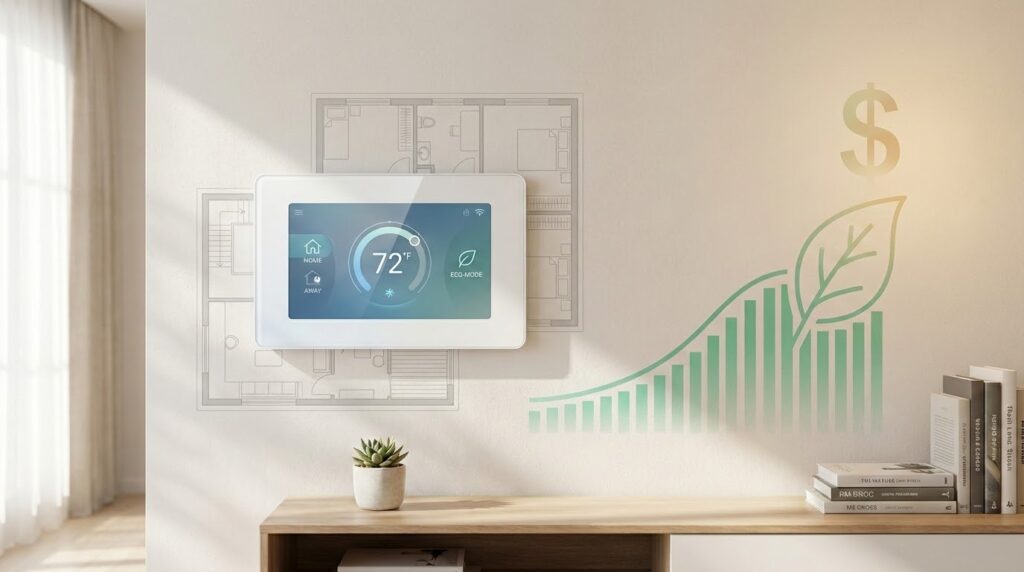
Modern climate control devices have transformed how we manage our home environments. These intelligent systems offer significant advantages over traditional temperature regulation methods.
The technology has evolved dramatically since the original Nest Learning Thermostat launched in 2012. PCMag and other experts have tracked this progression for over a decade. Today’s market offers options from budget-friendly models around $80 to premium devices costing $260 or more.
According to Energy Star, these advanced climate controllers can reduce energy usage by approximately 8% annually. This translates to around $50 in savings for the average American household. Premium models like the Ecobee Smart Thermostat Premium offer features beyond basic temperature control.
This comprehensive review draws from extensive testing and real-world performance data. We evaluate installation processes, compatibility considerations, and provide recommendations for different needs and budgets.
Key Takeaways
- Advanced climate control systems can reduce annual energy consumption by approximately 8%
- Average households may save around $50 per year on utility bills
- Market options range from $80 budget models to $260+ premium devices
- Modern units integrate voice assistants, air quality monitoring, and security features
- Expert reviews span over a decade of technological evolution
- Compatibility with existing HVAC systems is a crucial consideration
- Proper installation maximizes both comfort and efficiency benefits
Introduction to Smart Thermostats
Wi-Fi enabled temperature controllers revolutionize how we interact with our home’s heating and cooling. These devices connect directly to your home network for remote access and automation.
Unlike basic programmable models, modern units offer intelligent features. They learn your preferences and adjust automatically.
| Feature | Traditional Thermostat | Smart Thermostat |
|---|---|---|
| Remote Control | Manual adjustment only | Smartphone app and voice commands |
| Learning Capability | Fixed schedules | Adapts to your routines |
| Energy Reports | None | Detailed usage analytics |
These advanced devices provide app-based control from anywhere. You can adjust your home’s temperature while away or use voice assistants.
Most smart thermostats work with standard 24V HVAC equipment. This includes furnaces, air conditioners, and heat pumps. Advanced models support multi-stage systems.
Learning algorithms create optimal schedules based on your behavior. Geofencing and remote sensors offer additional automation options.
How Smart Thermostats Save You Money
Homeowners seeking to reduce utility costs will find significant value in modern climate management technology. Energy Star research confirms these devices cut energy use by approximately 8% annually.
This translates to around $50 in yearly savings for average American households. Your actual savings depend heavily on current heating and cooling habits. Homes running HVAC systems constantly see greater reductions.
Intelligent features drive these financial benefits. Automatic temperature adjustments occur when no one is home. Geofencing detects when residents leave or return.
Most units pay for themselves within 2-4 years. The payback period varies based on initial cost and local energy rates. Even budget-friendly options deliver substantial savings.
Long-term financial benefits accumulate significantly over 5-10 years. The investment typically returns multiple times its original value. Additional features like energy usage reports help identify consumption patterns.
Understanding HVAC Systems and Smart Thermostat Integration
Before selecting an advanced climate control device, homeowners must verify its compatibility with their current HVAC configuration. Not all modern temperature controllers work with every heating and cooling system.
Electric baseboard heating typically requires specialized line-voltage units. Most intelligent climate devices support standard 24V systems.
| HVAC System Type | Compatibility Level | Special Requirements |
|---|---|---|
| Standard Gas/Oil Furnace | High Compatibility | 24V system, C-wire recommended |
| Heat Pump Systems | Good Compatibility | May require specific wiring configuration |
| Multi-Stage Systems | Variable Compatibility | Requires advanced thermostat capabilities |
| Electric Baseboard Heat | Low Compatibility | Needs line-voltage specific models |
Multi-stage heating and cooling systems need more capable temperature regulation devices. These systems operate at different capacity levels for optimal efficiency.
Installation typically requires a C-wire for continuous power. Some models offer power extender kits for homes without this wiring.
Manufacturers provide online compatibility checkers to verify system matches. These tools analyze your existing wiring to recommend suitable options.
Key Features of Smart Thermostats
Contemporary automated climate controllers deliver comprehensive features that enhance both comfort and efficiency. These advanced units offer capabilities far beyond basic temperature adjustment.
Mobile app control stands as a fundamental feature. Users manage their home’s climate through intuitive smartphone applications. Both iOS and Android platforms support remote temperature adjustments from any location.
Voice command integration works with major assistants like Amazon Alexa and Google Assistant. This allows hands-free temperature changes without physical interaction. Simple spoken commands adjust your home’s environment effortlessly.
Remote room sensors represent another crucial innovation. These small wireless devices monitor conditions throughout different areas. They help eliminate hot and cold spots by balancing temperatures across your living space.
Manufacturers implement sensor technology differently. Ecobee’s SmartSensors include motion detection alongside temperature monitoring. Nest units typically provide simpler temperature-only sensors for basic room tracking.
Geofencing technology uses smartphone GPS to detect resident movement. The system automatically adjusts temperatures when people leave or return home. This optimizes comfort while reducing energy waste in empty houses.
Scheduling features allow detailed programming for various days. Some models offer AI-powered learning that creates optimal routines automatically. These intelligent systems adapt to household patterns over time.
Premium units include additional capabilities like humidity monitoring and air quality tracking. Filter change reminders and HVAC system alerts provide maintenance support. Energy usage reports help identify consumption patterns for better efficiency.
Comparing Top Smart Thermostat Models
Navigating the current market of intelligent temperature controllers reveals several standout performers. PCMag’s expert reviews highlight eight leading options with ratings from 4.0 to 4.5 stars.
The Ecobee Smart Thermostat Premium earns the highest rating at 4.5/5 Outstanding. Priced at $259.99, this premium model includes advanced air quality monitoring. It represents the high-end segment of available choices.
More affordable options deliver excellent performance at lower price points. The Amazon Smart Thermostat costs just $79.99 and integrates deeply with Alexa. Google’s Nest Thermostat ranges from $99.98 to $129.99 for balanced features.
Each brand brings distinct advantages to home temperature management. Ecobee focuses on comprehensive sensor systems and detailed analytics. Nest emphasizes AI learning and sleek design aesthetics.
Honeywell and Sensi offer reliable mid-range alternatives between $169 and $200. These units provide robust performance without premium pricing. They suit homeowners seeking dependable operation.
Real-world testing shows consistent temperature maintenance across all top-rated models. User reviews highlight reliable app connectivity and accurate scheduling. Energy savings vary based on installation quality and usage patterns.
Choosing the right device depends on your specific home needs and budget. Consider which features provide the most value for your situation. The following sections explore individual models in greater detail.
Detailed Review: Ecobee Smart Thermostat Premium
Ecobee’s flagship model integrates air quality monitoring, smart speaker functionality, and multi-platform compatibility in one device. This premium unit costs $259.99 and earned a 4.5/5 Outstanding rating from PCMag.
The device supports five major smart home platforms simultaneously. Users can connect with Amazon Alexa, Apple HomeKit, Google Assistant, IFTTT, and Samsung SmartThings. This versatility makes it ideal for households using multiple ecosystems.
Unique air quality tracking monitors VOC, humidity, and CO2 levels. The system alerts homeowners when measurements reach unhealthy ranges. This feature provides valuable health and safety information.
Built-in Alexa speaker functionality eliminates the need for separate Echo devices. Users can play music, control smart home devices, and get information directly through the thermostat. The smart speaker capability adds significant value.
Home security features transform the unit into a monitoring hub when paired with Ecobee accessories. SmartSensors detect motion and send alerts about unusual activity. This provides peace of mind when the home is empty.
The included remote SmartSensor monitors temperature and occupancy in different rooms. This helps balance heating and cooling throughout multi-room dwellings. It eliminates uncomfortable hot or cold spots effectively.
Technical specifications include dual-band Wi-Fi support and compatibility with 2-stage HVAC systems. The beautiful color touchscreen interface offers intuitive control. While the premium price and subscription requirements for some features may not suit all budgets, the comprehensive feature set justifies the investment for many homeowners.
Affordable Smart Thermostat Choices: Ecobee Essential vs. Nest Thermostat
When balancing cost and functionality, the Ecobee Essential and Nest Thermostat offer compelling value propositions. Both devices earn 4.0/5 Excellent ratings while staying under $140.
The Ecobee Smart Thermostat Essential costs $139.99 with a responsive color touchscreen. It works with Alexa, Google Assistant, and Apple HomeKit. Detailed energy usage reports help homeowners track consumption patterns.
Google’s Nest Thermostat ranges from $99.98 to $129.99. It features an attractive mirrored design with capacitive edge control instead of a touchscreen. This keeps the display fingerprint-free while maintaining sleek aesthetics.
Both units provide reliable temperature control through mobile apps. The Nest integrates tightly with Google Home and offers energy-saving suggestions. Ecobee’s Eco+ settings automate savings based on your usage patterns.
Home expansion options differ significantly. The Essential supports remote SmartSensors sold separately for about $100 per two-pack. The basic Nest model doesn’t support additional room sensors at all.
Each device has limitations compared to premium siblings. The Essential lacks air quality monitoring and built-in speakers. The Nest requires manual scheduling instead of automatic learning capabilities.
For budget-conscious buyers, the choice depends on interface preference and ecosystem compatibility. Both deliver solid performance and energy savings at accessible price points.
Why Choose the Best Smart Thermostats for Your Home
Leading manufacturers design their top-tier products with features that maintain relevance for years. Premium models offer advantages that basic units cannot match.
These advanced devices support multiple smart home platforms simultaneously. This flexibility protects your investment as technology evolves.
| Feature | Basic Models | Premium Models |
|---|---|---|
| Platform Support | Single ecosystem | 5+ platforms (Amazon, Google, Apple) |
| Sensor Support | None or limited | Multiple remote room sensors |
| Software Updates | Limited support | Long-term commitment |
| Air Quality Monitoring | Not available | Comprehensive tracking |
Long-term value accumulates through continuous software improvements. Manufacturers like Ecobee provide updates for many years.
Remote sensors ensure balanced temperature throughout your living space. They eliminate hot and cold spots effectively.
Advanced scheduling and energy analytics help optimize HVAC performance. These features deliver ongoing savings that justify the initial investment.
Real-world testing shows superior temperature accuracy and faster response times. Premium devices handle complex heating and cooling systems more effectively.
Smart Thermostats and Voice Assistant Integration
The ability to adjust your home’s environment through simple spoken instructions transforms daily comfort. Voice control eliminates the need for manual adjustments or smartphone apps.
Different models offer varying levels of voice assistant integration. Basic units work with external smart speakers. Advanced devices like the Ecobee Premium include built-in microphones and speakers.
| Voice Assistant | Ecobee Premium | Nest Learning | Amazon Smart Thermostat |
|---|---|---|---|
| Amazon Alexa | Full support with built-in speaker | Works with Echo devices | Optimized integration |
| Google Assistant | Complete compatibility | Native integration | Not supported |
| Apple HomeKit/Siri | Full support | Limited functionality | Not available |
| Matter Standard | Future update planned | Current support | Not announced |
Common voice commands include temperature adjustments and mode changes. Users can say “Alexa, set temperature to 72 degrees” or “Hey Google, activate eco mode.” These commands work through compatible smart speakers.
Platform compatibility is crucial for households invested in specific ecosystems. The Amazon unit works exclusively with Alexa. Google’s Nest thermostat integrates deeply with Google Home.
Built-in voice assistants offer significant advantages. The Ecobee Premium’s Alexa integration eliminates the need for separate speakers. This provides full smart home control from one device.
Voice commands can trigger complex automation routines. A single phrase like “Good night” can adjust temperature, lights, and security systems. This creates seamless smart home experiences.
Emerging standards like Matter promise broader compatibility. This will allow devices to work with multiple voice assistants simultaneously. Future updates may eliminate current platform limitations.
Design and Aesthetic Considerations
Manufacturers now prioritize aesthetic integration, recognizing that these devices occupy prominent wall space in living areas. The evolution from basic plastic boxes to elegant home accessories reflects changing consumer expectations.
Screen technology varies significantly between models. The Ecobee Premium features a high-resolution color touchscreen for detailed information display. Google’s Nest Learning Thermostat uses a rotating dial interface with a large, clear display.
Practical design factors impact daily use. Screen visibility in different lighting conditions ensures easy reading. Text size and contrast help users with vision challenges. Physical dimensions should suit available wall space.
Color options allow customization to match home decor. The Nest offers four distinct finishes: Snow, Sand, Charcoal, and Fog. Ecobee maintains a classic black aesthetic that blends with modern interiors.
Control interfaces balance technology with accessibility. Touchscreens provide intuitive navigation for tech-savvy users. Physical controls offer tactile feedback that may suit elderly residents or guests better.
Mounting considerations include decorative backplates that conceal wall imperfections. The overall footprint should complement rather than dominate the installation area. These design elements transform functional devices into attractive home features.
Energy Efficiency and Environmental Impact
Beyond financial savings, intelligent climate devices contribute significantly to reducing our collective carbon footprint. Energy Star research confirms these units cut energy consumption by approximately 8% annually.
This reduction translates to meaningful environmental benefits when scaled across millions of households. The same mechanisms that save money also decrease fossil fuel usage and greenhouse gas emissions.
| Efficiency Feature | How It Works | Environmental Benefit |
|---|---|---|
| Automatic Setbacks | Reduces heating and cooling when home is empty | Lowers energy waste during unoccupied hours |
| Weather Compensation | Adjusts indoor temperature based on outdoor conditions | Optimizes system runtime for current weather |
| Intelligent Preconditioning | Minimizes HVAC runtime through smart scheduling | Reduces peak demand on electrical grids |
| Energy Usage Reports | Provides detailed consumption analytics | Raises awareness about usage patterns |
Many utility companies offer rebates for installing these efficient temperature control systems. They recognize the role these devices play in reducing strain during extreme weather events.
Premium models include advanced features like humidity management and air quality monitoring. These additional capabilities improve comfort while using less energy overall.
The cumulative environmental impact is substantial. Widespread adoption can remove thousands of cars from roads equivalent in emissions reduction. Energy Star certification ensures verified performance standards for these ecological benefits.
Overcoming Common Installation Challenges
Before beginning any installation project, understanding potential obstacles can save time and prevent damage. Many homeowners face similar hurdles when upgrading their climate control devices.
The C-wire requirement often causes confusion. This common wire provides continuous power to your device. Most modern units need this for proper operation.
Solutions exist for homes without C-wires. Power Extender Kits work as effective alternatives. Some Ecobee models include these kits for easier setup.
Always assess your existing wiring before purchasing. Take clear photos of current connections. Use manufacturer compatibility checkers to verify system compatibility.
Common challenges include:
- Multi-stage heating and cooling systems requiring specific capabilities
- Unusual wiring configurations in older homes
- Integration issues with certain HVAC equipment brands
Professional installation costs $100-$200 but ensures proper configuration. It may be required to maintain your HVAC warranty coverage. Consider your electrical experience and system complexity before choosing DIY.
The Sensi Touch 2 and certain Ecobee units feature easier DIY installation. These models often fit standard wall plates without drywall patching. Always turn off your HVAC system power before starting any work.
Testing all heating and cooling functions completes the process. Make sure each mode operates correctly. Proper installation maximizes both comfort and efficiency benefits.
Choosing a Smart Thermostat for Different HVAC Systems
Your home’s heating and cooling configuration determines which automated temperature controller will work effectively. Not all HVAC systems work with the same devices.
Most standard units are designed for 24V forced air systems. These include gas or oil furnaces with central air conditioning. This represents the most common residential setup.
Heat pump systems require more specialized capabilities. The right thermostat must manage auxiliary heating strips and emergency heat modes. This ensures proper operation during colder weather.
Electric baseboard heating needs line-voltage models like the Mysa Smart Thermostat. These handle higher electrical loads safely. They can save up to 26% on heating bills through intelligent scheduling.
Underfloor radiant heating benefits from specialized controllers. The Honeywell Evohome offers zonal control for multiple heating areas. This is ideal for bathrooms and luxury homes.
Multi-stage systems need devices that control equipment stages independently. This includes 2-stage or variable-speed configurations. Proper staging maximizes efficiency throughout your home.
Combination systems with multiple components require integrated management. This includes furnaces, air conditioners, and ventilation equipment. Choose a thermostat that coordinates all elements seamlessly.
Integration with Home Automation Platforms
The true potential of modern climate management emerges when devices communicate across multiple smart home platforms. This integration transforms basic temperature control into comprehensive home automation.
Different models offer varying levels of platform compatibility. The Ecobee Premium supports Amazon Alexa, Apple HomeKit, Google Assistant, IFTTT, and Samsung SmartThings. Google Nest devices work seamlessly with Google Home and support the Matter standard.
Matter represents a new connectivity standard promising better interoperability. Compatible devices like the Nest Learning Thermostat can work across different ecosystems more easily.
Basic voice control allows simple temperature commands through Amazon Alexa or Google Assistant. Deep platform integration enables complex routines involving multiple devices.
Practical automations include “good morning” sequences that adjust temperature while opening blinds. “Away” modes can set back heating while arming security systems.
IFTTT integration on some models enables custom automations beyond standard platforms. These can adjust settings based on outdoor air quality or electricity pricing signals.
Platform-agnostic devices protect your investment if you switch ecosystems. They allow using features from different smart home platforms simultaneously.
Expert Tips for Maximizing Smart Thermostat Performance
Getting the most value from your investment involves implementing expert-recommended strategies for energy savings. Proper configuration ensures optimal comfort while reducing utility costs.
Set temperature setbacks of 7-10°F during sleep or away periods lasting eight hours or more. This approach maximizes savings without overtaxing your HVAC system during recovery.
Place remote sensors in frequently occupied living areas rather than hallways. Avoid locations near exterior doors or temperature extremes that could skew readings.
Enable geofencing for automatic home temperature adjustments based on smartphone location. Use eco modes during sleep hours to prioritize energy conservation.
Regular maintenance includes cleaning the device screen and checking wireless sensor batteries. Update firmware when available to access new features and security improvements.
AI-powered units like the Nest Learning Thermostat require several weeks to learn household patterns effectively. Ecobee’s Eco+ features deliver immediate automated savings through intelligent scheduling.
Seasonal adjustments optimize performance as weather changes. Expand setback periods during moderate weather when heating and cooling demands are minimal.
User Experiences and Real-World Performance
Real-world experiences reveal how automated temperature controllers perform in everyday households. Professional reviewers like PCMag’s Jacob Krol spent months testing the Nest Learning Thermostat. He particularly valued the Smart Schedule feature that suggests adjustments users can accept or decline.
Wirecutter’s long-term testing found the Ecobee Smart Thermostat Premium maintained consistent comfort year-round. Its SmartSensors effectively balanced conditions across multiple rooms in the home. This eliminated hot and cold spots that often plague multi-level houses.
Many users report noticeable energy bill reductions within the first few months. Families switching from manual units often see 15-20% savings on heating costs. The convenience of remote control through apps receives frequent praise in customer reviews.
Common frustrations include installation challenges in older homes without C-wires. Some users experience occasional Wi-Fi connectivity issues over time. Learning curves for advanced features can initially frustrate less tech-savvy homeowners.
Performance metrics show these devices maintain set temperatures with impressive accuracy. Response times vary by model but generally provide quick HVAC activation. The adjustment period typically takes several weeks for AI learning to develop accurate patterns.
Different households benefit in unique ways based on their schedules and home layouts. Families with irregular routines appreciate geofencing technology. Multi-room dwellings gain the most from remote sensor integration.
Conclusion
As we’ve explored throughout this comprehensive review, automated temperature controllers offer diverse benefits across different price points. The Ecobee Smart Thermostat Premium stands out for its extensive features and platform support.
Budget-conscious shoppers will find excellent value in the Ecobee Essential and Nest Thermostat. These devices deliver core functionality at accessible prices while maintaining reliable performance.
Before purchasing any device, verify your HVAC system compatibility and consider voice assistant preferences. Make sure your home wiring supports the unit or that power extender solutions are available.
Investing in quality climate control pays dividends through reduced energy bills and enhanced comfort. Take time to configure settings properly for optimal heating and cooling efficiency.