
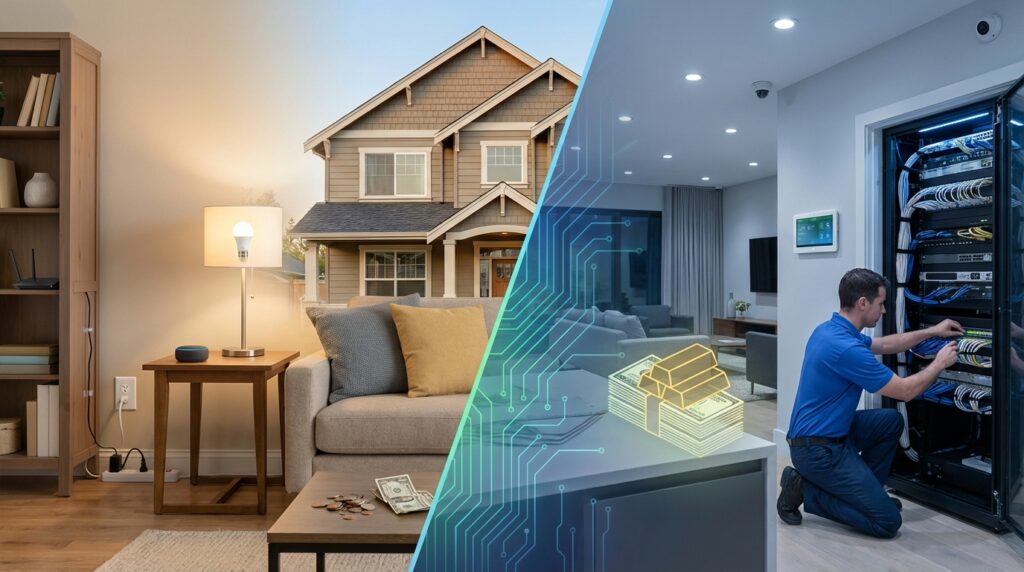
Thinking about making your living space more connected? You’re not alone. Many people want to add modern conveniences to their houses. But what does this investment really look like?
Prices can vary widely. A basic do-it-yourself setup might start around $100. Professional installations for larger properties can reach much higher figures. The final price depends on several factors.
These include the size of your property and existing wiring. The complexity of your chosen setup also matters. Whether you install it yourself or hire professionals makes a big difference too.
The good news is that technology has become more accessible. There are options for nearly every budget. You can start with simple upgrades for one room. Or you can plan a whole-house solution that manages lighting, security, and comfort.
Key Takeaways
- Prices range from affordable DIY kits to high-end professional installations
- Your property size and existing wiring significantly impact the final investment
- Professional installation typically costs more but offers greater reliability
- You can start small with single-room upgrades and expand over time
- Consider both upfront expenses and potential ongoing subscription fees
- Industry data shows average investments between $2,000 and $7,000
- Luxury whole-house systems can reach six-figure amounts
Introduction to Home Automation and Its Growing Appeal
More American families are discovering the advantages of living spaces that anticipate their preferences and routines. This technology continues to gain popularity as people seek greater control over their environments.
Understanding the Benefits of a Smart Home
Connected residences offer significant convenience through voice commands and automated schedules. Imagine your lights adjusting automatically as the sun sets.
Energy efficiency represents another major advantage. According to industry data, intelligent thermostats can save approximately $219 annually on utility bills. Power strips and refrigerators contribute additional savings.
How Home Automation Enhances Comfort and Security
Your living space becomes more comfortable with personalized temperature and lighting settings. Systems can learn your patterns to create ideal conditions.
Security features provide peace of mind through real-time alerts and remote monitoring. Water leak detectors prevent expensive damage, while smoke alarms offer protection even when you’re away.
“Many insurance companies provide discounts for monitored security systems, helping offset initial investments.”
These integrated systems continue evolving with artificial intelligence, making them more intuitive over time.
Breaking Down Smart Home Automation Costs
When budgeting for modern residential technology, several key elements determine your overall expenditure. The final price tag varies significantly based on your specific needs and property characteristics.
What Impacts the Overall Price Tag
Your property’s size directly affects the number of devices needed. A smaller residence requires fewer components than a larger one. This creates a wide range of potential investments.
The installation method also plays a crucial role. Do-it-yourself setups can reduce labor expenses. Professional installations typically involve higher costs but offer greater reliability.
Existing infrastructure matters tremendously. Modern wiring supports technology integration more easily. Older properties might need electrical upgrades, adding to the total cost.
Key Components Driving Cost Variations
Component selection creates substantial price differences. Premium brands command higher prices than consumer-grade options. The quality and features of each device influence your final budget.
Wireless systems using protocols like Zigbee offer flexibility. Hardwired solutions provide enhanced reliability but require more extensive installation. Your choice between these approaches affects the overall system cost.
Comprehensive smart home system planning should account for future expansions. Starting with core functionality allows for gradual enhancements. This staged approach helps manage your investment over time.
| System Type | Average Cost Range | Installation Complexity | Best For |
|---|---|---|---|
| Basic Wireless DIY | $1,000 – $3,000 | Low | Starter setups, apartments |
| Mid-Range Integrated | $3,000 – $7,000 | Medium | Family homes, comprehensive features |
| Premium Whole-Home | $7,000 – $15,000+ | High | Larger properties, luxury integration |
Factors Influencing Home Automation Pricing
Your investment in modern residential technology can vary dramatically based on the communication protocols and installation approaches you select. These foundational choices create ripple effects throughout your entire setup.
Role of System Type and Installation Method
Communication protocols form the backbone of your connected living experience. Hardwired systems like X-10 and UPB use existing electrical wiring for maximum reliability. They virtually eliminate interference but require professional installation.
Wireless options such as Zigbee and Z-Wave offer easier DIY setup. These can support hundreds of devices but may need stronger network infrastructure. Hybrid protocols like C-Bus combine both approaches for flexibility.
Installation complexity directly impacts labor expenses. DIY wireless setups might involve minimal additional costs. Professional hardwired installations typically require electricians and can significantly increase your budget.
Considerations for Brand and Features
Brand selection influences both initial investment and long-term compatibility. Premium brands like Crestron and Savant offer extensive capabilities but come with higher price tags. Consumer-focused options provide affordability with simpler setups.
The features you prioritize determine which systems make sense. Basic control functions cost far less than sophisticated whole-house integration. Voice control, energy monitoring, and multi-room audio each add to the final figure.
| Protocol Type | Reliability | Installation Complexity | Best Use Cases |
|---|---|---|---|
| Hardwired (X-10, UPB) | Highest | Professional Required | Whole-house systems, reliability-focused |
| Wireless (Zigbee, Z-Wave) | Good | DIY-Friendly | Starter setups, gradual expansion |
| Hybrid (C-Bus, Insteon) | Excellent | Mixed | Flexible systems, mixed device types |
DIY Installation versus Professional Services
One of the biggest choices you’ll face is whether to tackle the setup yourself or bring in experts. This decision impacts your budget, the final result, and your long-term satisfaction.
Each path offers distinct benefits. The right choice depends on your technical skill, available time, and the complexity of your desired system.
Cost Savings with DIY Options
Handling the work yourself can lead to significant savings. You avoid labor fees, which typically run $80 to $100 per hour.
Simple wireless setups are perfect for a do-it-yourself approach. Brands like Google Nest and Ring design products for easy installation. You might complete this work in just an afternoon.
Be prepared to invest your own time for research and troubleshooting. This process can take several days to get everything working perfectly.
Advantages of Professional Installation
Hiring a pro brings expertise and peace of mind. They ensure everything is set up correctly the first time.
Professional installation guarantees code compliance and system reliability. This is crucial for complex integrations involving lighting or security.
For premium systems like Elan or Crestron, expert setup is required. These installations start around $10,000 but offer unparalleled performance.
| Service Type | Average Labor Time | Typical Price Range | Best For |
|---|---|---|---|
| Basic Wireless DIY | 2-4 hours (your time) | $100-$300 (if help needed) | Tech-savvy homeowners, starter systems |
| Professional Wireless Setup | 1-2 hours | $150-$200 | Busy individuals, ensuring quick results |
| Complex Wired System | 1-3 days | $500-$5,000+ | Whole-house integration, luxury features |
Consider a hybrid approach for the best value. Handle simple devices yourself and hire a pro for complex wiring or programming. This balances savings with guaranteed performance for critical components.
Smart Home System Components and Technology Options
The heart of any modern residential setup lies in choosing the right combination of devices and systems. These components work together to create a seamless living experience that adapts to your lifestyle.
Lighting, Security, and Climate Controls
Lighting systems provide immediate benefits you’ll notice every day. Simple smart bulbs start around $10-$20 each, while comprehensive whole-house installations range from $1,000-$3,000. These systems include switches, dimmers, and automated scenes.
Security represents a critical investment for peace of mind. Complete systems average $700-$5,000 and typically include multiple devices working together. You’ll find cameras, door sensors, and motion detectors that provide real-time monitoring.
Climate control devices centered around thermostats optimize your heating and cooling efficiency. They learn your schedule to create comfortable environments while managing energy usage. Comprehensive HVAC integration can reach $2,000 for full installation.
Integration of Entertainment and Energy Management
Entertainment system integration allows unified control of televisions and audio equipment. Basic connectivity starts around $30, while whole-home audio systems can reach $2,000+. Speakers distributed throughout living spaces create immersive experiences.
Energy management systems monitor and control power usage throughout your property. Smart plugs and hardwired outlets track consumption and eliminate phantom loads. These devices can automatically adjust during peak rate periods.
“The true value emerges when these systems work together seamlessly—creating environments that anticipate your needs without constant manual control.”
Additional essential devices include central hubs that coordinate all your technology. Smoke detectors with smartphone alerts and motorized blinds enhance both safety and comfort. Professional wiring ensures these components communicate effectively.
Budgeting Your Home Automation Investment
A thoughtful payment strategy can transform an overwhelming expense into manageable steps. Planning your financial approach helps you build the system you want without straining your resources.
Spreading Costs with Staged Installations
Phased implementation lets you spread purchases across multiple years. Start with essential security features in your first phase. Add lighting controls and climate systems in subsequent stages.
This approach gives you time to learn each component thoroughly. You’ll understand which features provide the most value before expanding further.
Utilizing Payment Plans and Promotions
Many retailers offer financing options for larger purchases. These payment plans typically span 12 to 36 months. Monthly payments of $150-$400 make premium systems more accessible.
Strategic timing can yield significant savings. Major sales events like Black Friday often feature discounts of 20-50% on popular devices.
“A staggered approach to technology investments allows homeowners to build comprehensive systems while maintaining financial flexibility.”
| Payment Option | Time Frame | Best For |
|---|---|---|
| Staged Installations | 1-3 years | Gradual system expansion |
| Retailer Financing | 12-36 months | Immediate full system |
| Cash Purchase | Immediate | Budget-conscious shoppers |
Remember to account for monthly monitoring fees in your overall budget. These typically range from $10-$50 depending on service levels.
Real-World Cost Examples and Pricing Ranges
Real-world pricing benchmarks offer valuable perspective on what various expenditure levels deliver. These examples help you understand the actual investment needed for different setups.
Average Price Ranges for Basic to Advanced Systems
Basic technology packages typically fall between $1,000 and $3,000. This range covers essentials like voice control and programmable thermostats.
Mid-level installations suit most family residences. They incorporate security features and multiple lighting zones for comprehensive coverage.
Advanced whole-house systems start around $7,000. These offer sophisticated integration across all living areas.
Comparisons Across Different Home Sizes
Property dimensions significantly impact your final investment. Smaller residences require fewer devices than larger ones.
A typical 2,000-square-foot property with moderate features averages $5,000-$8,000. This provides excellent value for complete coverage.
| System Type | Price Range | Ideal For | Key Features |
|---|---|---|---|
| Basic Setup | $1,000-$3,000 | Apartments & small homes | Voice control, thermostat, basic lighting |
| Mid-Level System | $3,000-$7,000 | Average family homes | Security, multi-room lighting, climate control |
| Advanced Integration | $7,000-$15,000+ | Large or luxury homes | Whole-house control, entertainment, professional programming |
The wide range of options allows homeowners to select solutions matching their specific needs. Every investment level delivers appropriate functionality.
Trends and Future Considerations in Home Automation
Future developments in household technology are set to make systems more intuitive and interconnected than ever. The capabilities of these setups continue to expand each year.
Emerging Technologies and Protocols
A significant shift is happening with the new Matter protocol. This standard allows devices from different brands to work together seamlessly. It eliminates the frustration of incompatible ecosystems.
Artificial intelligence is transforming how these setups operate. They learn household patterns and predict needs automatically. This creates environments that maximize comfort and efficiency.
Voice control continues improving with more natural language processing. Interaction becomes increasingly intuitive for all household members.
Long-Term Value and Recurring Expenses
Considerations extend beyond the initial purchase. Device longevity and manufacturer support commitment matter greatly. Premium options often provide better value through superior reliability.
Homeowners should plan for regular maintenance. Technology requires software patches and occasional hardware replacements. This keeps everything secure and functioning properly.
Recurring expenses represent an important factor. These include monthly monitoring fees and cloud storage subscriptions. Budgeting for these ensures smooth long-term operation.
| Consideration | Budget Option | Premium Option | Impact on Value |
|---|---|---|---|
| Device Longevity | 2-3 years | 5-7 years | Higher replacement frequency |
| Support Commitment | Limited updates | Extended support | Long-term compatibility |
| Update Frequency | Irregular | Regular security patches | System security |
| Ecosystem Stability | May become obsolete | Forward-compatible | Future expansion potential |
Quality installations can enhance property value. Younger buyers increasingly expect modern features. This makes the investment worthwhile for many homeowners.
Conclusion
Embracing residential technology transforms daily routines while delivering tangible benefits. Your installation represents a strategic investment that pays dividends through enhanced security and energy savings.
System options range from basic starter packages to comprehensive whole-property solutions. Whether you choose professional installation or DIY approaches depends on your technical comfort and budget. The right devices—from thermostats to security cameras—should align with your specific priorities.
Consider long-term factors like maintenance and technology updates. Modern protocols ensure compatibility across different brands. This technology continues evolving, making sophisticated features more accessible each year.
Ultimately, the convenience and peace of mind gained make this upgrade genuinely worthwhile for modern living.